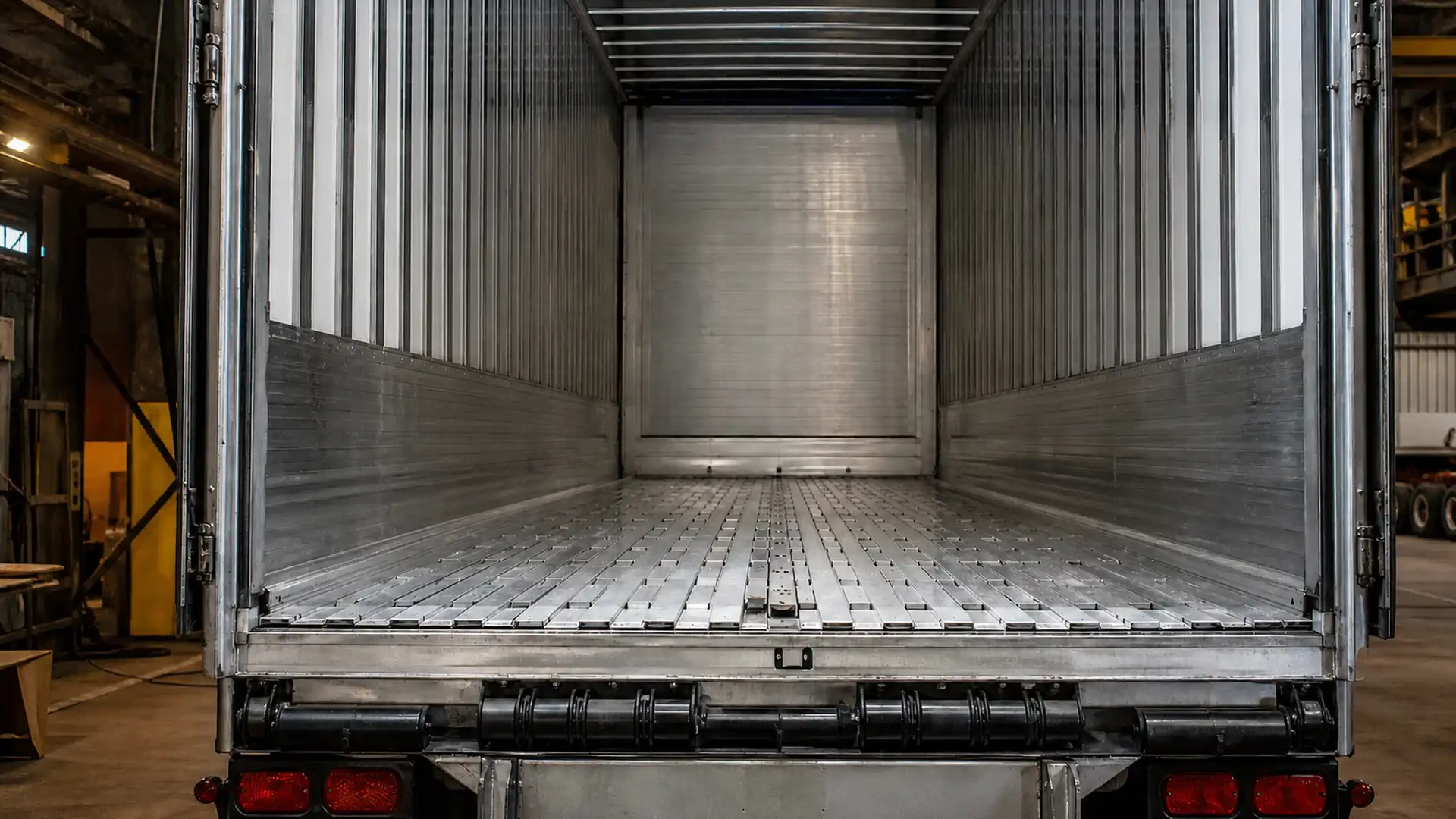
Why your Walking Floor moves unevenly and what to check
A Walking Floor should move cargo through a controlled, repeatable sequence. When the floor begins to hesitate, jerk, move more slowly on one side or stop before completing a cycle, the symptom deserves attention. Uneven movement can point to a hydraulic issue, resistance in the moving floor, wear in a component or damage that is affecting alignment.
Do not start by guessing which part has failed. Document exactly what the system is doing and arrange a professional inspection before repeated operation creates additional damage.
What does uneven Walking Floor movement look like?
“Uneven” can describe several different behaviors. The pattern you observe gives a repair shop better information for the initial diagnosis.
Common examples include:
One group of slats moves later than the others.
The floor starts normally and slows during the cycle.
Movement is smooth in one direction but irregular in the other.
The system jerks, vibrates or produces a new sound under operation.
The floor stops intermittently and begins moving again.
Cargo remains in one area because the floor is not advancing uniformly.
These symptoms do not confirm a single cause. A Walking Floor is a connected system, so a visible movement problem may involve hydraulic flow, valves, cylinders, bearings, floor slats, accumulated material or structural alignment.
Five areas that may contribute to irregular movement
1. Hydraulic flow is inconsistent
The hydraulic system provides the force that moves the floor. A leak, restriction, pressure problem or worn component can change how that force reaches the moving sections.
Clues may include slower response, a change in operating sound, visible fluid or movement that becomes less consistent as the cycle continues. Because hydraulic systems can retain pressure, troubleshooting beyond a safe visual observation should be left to trained service personnel.
2. A valve or cylinder is not responding consistently
Walking Floor systems depend on coordinated hydraulic components. Control, check and switching valves help direct flow, while cylinders create the movement. If one part of that sequence is not responding correctly, the floor may hesitate or lose its regular pattern.
The symptom alone does not identify which valve or cylinder needs attention. Component size, configuration and system condition must be checked before a repair or replacement decision is made.
3. Slats, bearings or guides are creating resistance
Floor slats move across supporting and guiding components. Wear, deformation or trapped material can add resistance. The system may still move, but it has to work against that resistance, creating an uneven or strained cycle.
Look for visible changes such as a slat sitting differently from the others, an area that is rubbing, damaged edges or debris packed into an accessible area. Do not enter, reach into or work beneath a system that could move unexpectedly.
4. Material buildup is interfering with movement
Residue from the cargo can collect around moving sections and beneath accessible edges. The type of material matters: fine particles, moisture, compacted debris and abrasive cargo can affect the floor in different ways.
Record what the trailer was carrying when the symptom appeared. That detail can help the shop distinguish a recurring mechanical issue from resistance associated with a specific load or operating condition.
5. Structural or aluminum damage is affecting alignment
A crack, deformation, impact or damaged floor section can change the way components line up. Even a hydraulic system that is producing force may not move the floor evenly if the structure or slats are binding.
Visible cracking, a sunken area, new rubbing marks or a floor section that no longer sits correctly should be inspected before the trailer returns to normal service. Welding may be part of the repair, but the cause and extent of the damage must be evaluated first.
What to record before requesting service
Good information can make the first conversation with a repair shop more productive. If it is safe to do so, record:
Whether the problem happens while loading, unloading or in both directions.
Whether the system is cold, warm, loaded or empty when the symptom appears.
Which section appears to move first, late or not at all.
Any new sound, vibration, leak or visible rubbing.
The type of cargo being moved.
Recent repairs, part replacements or hydraulic service.
Photos or a short video taken from a safe position.
Avoid repeatedly cycling the system just to capture more footage. One clear observation is more useful than additional operation that may worsen the condition.
What a specialized Walking Floor inspection should consider
A useful diagnosis looks at the system as a whole instead of replacing the first component that appears suspicious. Depending on the symptom, an inspection may include:
Hydraulic lines, connections and visible leaks.
System response and pressure behavior using appropriate equipment.
Control, check and switching valve operation.
Cylinder condition and coordinated movement.
Floor slats, bearings, guides and areas of resistance.
Structural alignment and visible aluminum damage.
Evidence of debris, impact or unusual wear.
The objective is to identify the source of the irregular movement and determine whether the repair involves adjustment, cleaning, a hydraulic component, floor hardware, welding or a combination of services.
Why waiting can turn one symptom into several problems
Uneven movement is not only an inconvenience during unloading. Continued resistance can place additional stress on other parts of the system. A small leak may become more significant. A misaligned slat may wear against adjacent material. A crack may extend under repeated loading or vibration.
That does not mean every irregular movement requires a major repair. It means the most practical time to diagnose the problem is while the symptom is still limited and observable.
Walking Floor diagnosis and repair in Tampa
Brothers Truck Trailer Repair and Welding Corp. provides Walking Floor diagnosis, hydraulic repair, floor and component service, and aluminum welding from its Tampa workshop. If your floor is moving unevenly, slowly or with a new vibration, contact the shop with the observations listed above.
Request a Walking Floor diagnosis before irregular movement becomes a complete stop. Call Brothers Truck Trailer or visit the Tampa workshop at 1620 S 51st St, Tampa, FL 33619.

Expert commercial trailer repair in Tampa for Walking Floor, aluminum welding, and fleet maintenance. Minimize downtime with Brothers Truck Trailer Repair.

Preventive maintenance for commercial trailers: inspection checklists, Walking Floor care, aluminum repairs, and fleet service in Tampa Bay.
Master walking floor trailer hydraulic troubleshooting with expert diagnostics, safety protocols, and repair strategies to minimize fleet downtime.