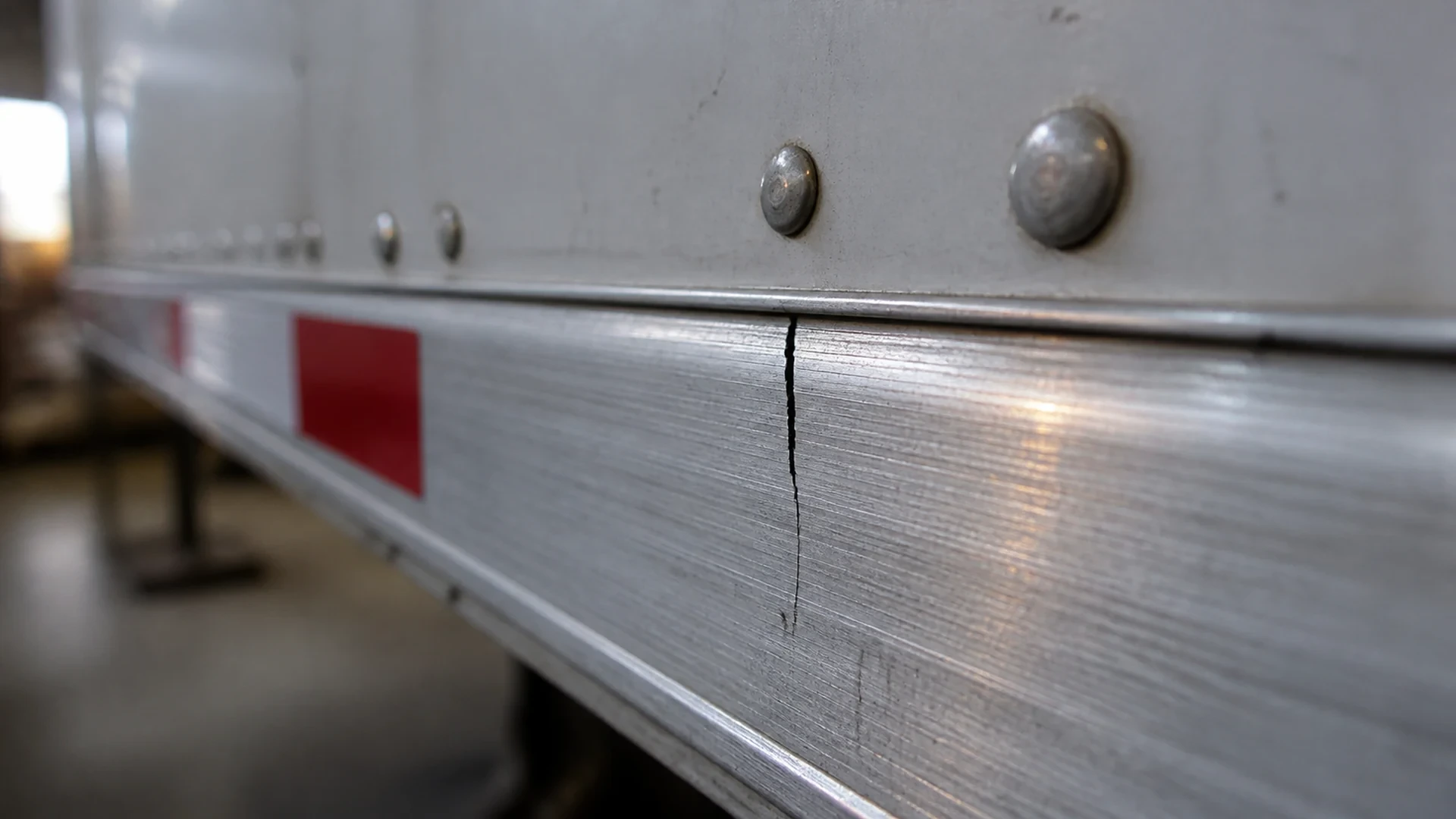
When a trailer crack may require more than a quick weld
A visible crack may look like one isolated line in the metal, but the repair decision should not begin with appearance alone. Its location, surrounding deformation, nearby contact marks, repair history and effect on trailer operation can all change the scope of the inspection.
That does not mean every crack requires an extensive repair. It means the damaged area should be evaluated before anyone assumes that closing the visible line is the complete solution. Brothers Truck Trailer Repair and Welding Corp. provides trailer repair, aluminum welding and fabrication from its workshop at 1620 S 51st St, Tampa, FL 33619.
Why the area around the crack matters
Welding addresses damaged metal, but a crack can also be evidence of a condition acting on the surrounding area. Impact, repeated movement, changed alignment, rubbing or a nearby component that no longer sits as expected may contribute to visible damage. The exact cause cannot be confirmed from a photograph alone.
An inspection helps answer two separate questions:
1. What metal damage is visible and accessible?
2. Is there another condition that should be addressed as part of the repair plan?
Keeping those questions separate prevents a symptom from being treated as a complete diagnosis.
Signs that support a broader inspection
Deformation extends beyond the crack
A bent edge, raised section, sunken area, changed gap or panel that no longer follows its usual line adds useful context. The crack may be only one visible part of the affected area.
Document both the close detail and the overall shape. Avoid pushing, pulling or attempting to straighten the material simply to test how it responds.
The crack has returned near an earlier repair
A recurring crack does not prove that the previous weld was incorrect. The area may still be exposed to movement, contact, alignment changes or another source of stress. Record when the prior work was completed, which area was repaired and when the new line became visible.
The repair history helps the shop evaluate the current condition without guessing from the newest mark alone.
New rubbing or polished marks appear nearby
Fresh contact marks, scraping, missing finish or metallic residue may show that two surfaces are touching. The source of that contact should be considered before the damaged area returns to normal use.
Do not reach between components or operate moving equipment to create a better view. Photograph only what can be observed safely.
A component or trailer section looks out of position
A shifted panel, changed seam, irregular floor section or altered spacing can be relevant to the welding inquiry. The shop may need to understand whether the visible damage and the position change are related.
The damage appeared after an impact or operating event
If the crack became visible after contact, a difficult loading or unloading event, a new vibration or another specific occurrence, include that sequence in your notes. Describe what was observed without assigning a cause that has not been confirmed.
Trailer operation changed at the same time
Noise, vibration, rubbing, uneven movement or a component that no longer operates as expected may justify looking beyond the crack. On a Walking Floor trailer, for example, hydraulic, mechanical and structural conditions can influence the same operating symptom.
What to document before requesting welding service
Useful documentation helps the first shop conversation without replacing an in-person inspection.
Take one wide photo and several detail photos
Start with an image that shows where the damage sits on the trailer. Then capture the crack, its ends and the nearby seams, fasteners, supports, contact marks or previous welds. Keep the original files so the shop can zoom in without relying on screenshots.
Record when and how the damage was noticed
Write down the approximate date and whether the trailer was loaded, empty, parked, moving or being operated when the condition became visible. If the crack changed, note the sequence rather than estimating a cause.
Describe changes around the area
Include deformation, widening gaps, rubbing, noise, vibration, leaks or altered movement. A simple list is often more useful than a conclusion such as “the weld failed” or “the frame is bad.”
Include recent work
Tell the shop about prior welding, fabrication, component replacement, impact repair, floor work or maintenance near the area. Share available dates, invoices or authorized photos when possible.
Identify the trailer and affected location
Provide the trailer type, available identification details and a plain description of the location. Do not remove parts solely to expose the crack unless the shop has advised that step and the work can be completed safely.
What a trailer welding inspection may consider
The exact inspection depends on the trailer and the location of the damage. The shop may review:
The visible length, direction and edges of the crack.
The shape and condition of the surrounding metal.
Previous welds, repairs or modifications in the area.
Contact, rubbing, impact marks or displaced components.
Access needed to prepare the metal and complete the repair.
Nearby movement or alignment that may affect the area.
Whether fabrication or another confirmed trailer-repair service should be discussed.
This evaluation does not make every job larger. Its purpose is to define whether the repair is localized or whether the surrounding condition needs attention too.
What not to do before the inspection
Do not grind away the crack or its ends before the original condition is documented.
Do not cover the area with filler, sealant or paint to make it look finished.
Do not repeatedly operate equipment to see whether the crack changes.
Do not attempt welding without the appropriate training, equipment and knowledge of the damaged area.
Do not assume a photo confirms the repair method, material requirements or final scope.
If the damage appears unstable, affects normal operation or creates a condition you cannot observe safely, stop and request professional guidance before continuing.
Local trailer welding and inspection in Tampa
Brothers Truck Trailer provides general trailer repair, aluminum welding, fabrication and Walking Floor service from its Tampa workshop. When you contact the shop, explain the visible damage, surrounding condition, operating changes and recent repair history.
Call +1 (813) 750-6380, email [email protected] or visit 1620 S 51st St, Tampa, FL 33619 to request an evaluation.
Found a crack, deformation or new rubbing mark? Document the complete area and call Brothers Truck Trailer at +1 (813) 750-6380 to discuss an inspection at the Tampa workshop.
Technical reference for 3500 lbs trailer axles covering GAWR, tire ratings, brake rules, fitment specs, and inspection protocols for commercial fleets.
Learn how etracks in trailer systems work, installation best practices, and repair procedures to keep your cargo secure and compliant on the road.
Master trailer wheel bearings maintenance with expert steps for inspection, repacking, and replacement. Reduce downtime and prevent costly failures today.