Trailer Wheel Bearings Maintenance: The Complete Guide
You're usually not staring at a blown hub the day it starts. You're staring at a hub that ran a little warmer than the others, maybe came back with a faint smell of grease, maybe showed a bit of play on the lift. That's the moment trailer wheel bearings maintenance either stays a shop habit or turns into a roadside recovery, a delayed delivery, and a wheel-end failure nobody planned for.
For Tampa Bay fleets, that difference matters more than most drivers want to admit. A trailer that sits out of service doesn't just miss miles, it interrupts schedules, burns labor, and puts pressure on the next dispatch. The smart move is to treat the wheel end as a safety system, not a grease point.
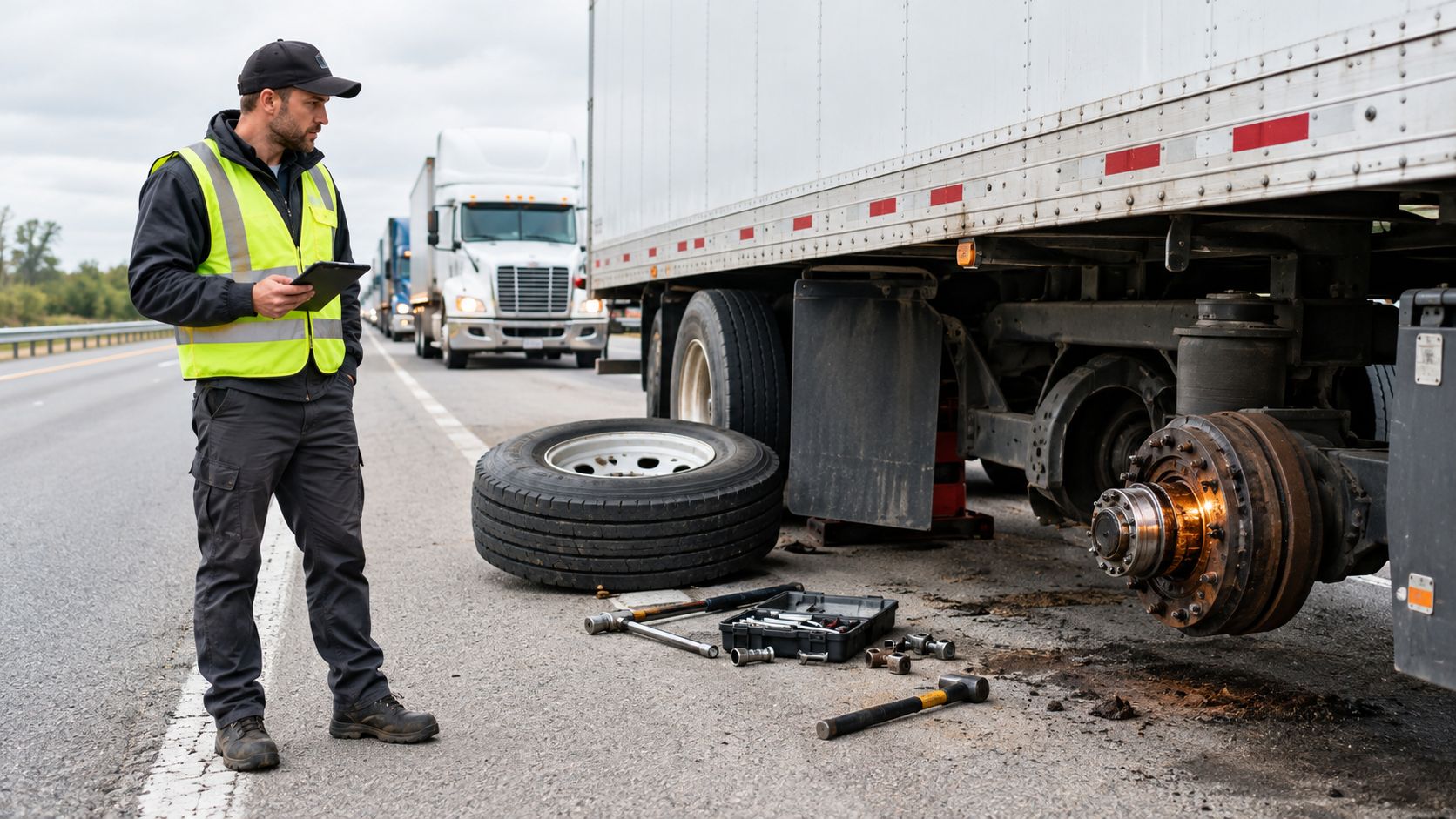
For shops and fleets that need a broader repair partner, Brothers Truck Trailer Repair and Welding Corp. works in the same real-world space where downtime, parts flow, and trailer condition all collide.
Table of Contents
- Why Trailer Wheel Bearings Demands Your Attention
- When to Inspect and What Failure Looks Like
- Step-by-Step Trailer Bearing Service Procedure
- Repacking vs Replacing: Making the Right Choice
- Lubrication, Torque, and Critical Adjustments
- Building a Preventive Maintenance Program
Why Trailer Wheel Bearings Demands Your Attention
A warm hub can fool people. A 2010 Miller Electric manufacturer report submitted to NHTSA describes a wheel-assembly separation on a small welder trailer. This is a case-specific example of a wheel-end failure, not a general NHTSA investigation of all trailer bearings. Bearing adjustment and lubrication must follow the instructions for the installed axle and hub.
The failure chain starts small
The same Miller Electric manufacturer report lists three possible causes: over-torqued axle nuts, insufficient or improper lubrication, and defective bearings. Tight is not a maintenance standard. Use the manufacturer's adjustment procedure and specified lubricant, and inspect heat, leakage, noise and abnormal play.
Practical rule: if a hub is changing temperature, sound, or feel, it's already telling you something.
That mindset matters in Tampa Bay because trailers work hard here. Frequent loading cycles, dust, water, vibration, and long service days all punish wheel ends. When a trailer loses time for a hub problem, the issue isn't just the repair itself, it's the missed route, the extra inspection, and the pressure on the next shift.
The 2021 Terran Axle Part 573 recall report submitted to NHTSA covered 5,796 axles. Terran estimated that 5.6% of that recall population had insufficient spindle-nut torque; this was a manufacturer estimate for those axles, not a failure rate for trailers generally. The report describes vibration, overheated bearings, bearing failure, smoke from friction and abnormal tire wear as possible consequences.
When to Inspect and What Failure Looks Like
Identify the axle, hub and bearing system before choosing a service schedule. The repacking steps in this guide apply only to conventional, serviceable grease-lubricated tapered-roller bearings. Oil-bath hubs and sealed or unitized bearings need their own manufacturer procedures and must not be treated as grease-repack systems. For example, the Lippert 8K-16K axle owner's manual specifies annual or 36,000-mile grease replacement, whichever comes first, for its covered applications. That interval is not universal; use the manual for the installed equipment and its severe-service requirements.
What the warning signs actually look like
At every wheel-end check, look for leakage, unusual heat, abnormal looseness, rough rotation, noise and seal damage. Stop safely and have a suspect wheel end inspected before continuing service. The Terran Axle 2021 manufacturer recall report describes vibration, overheated bearings, smoke from friction and abnormal tire wear associated with insufficient spindle-nut torque in the affected axles.
| Trailer Wheel Bearing Inspection Indicators | ||
|---|---|---|
| Symptom | Likely Cause | Recommended Action |
| Hub runs hotter than the others | Torque issue, low lubrication, bearing damage | Stop and inspect the wheel end immediately |
| Grinding or rumbling sound | Roller or race wear, contamination | Disassemble and assess the bearing set |
| Wheel looseness or play | Under-tightening, worn components | Verify adjustment and inspect for damage |
| Uneven tire wear | Bearing vibration, wheel-end instability | Check the hub, tire, and fastener condition |
| Grease or oil leakage | Seal failure, overload, excess heat | Tear down and replace damaged parts |
| Smoke or strong friction smell | Severe overheating | Remove from service at once |
A bearing that runs hot after a route isn't asking for more grease. It's asking for teardown.
In the Miller Electric 2010 manufacturer report, excessive axle-nut torque was found in 3% of the examined assemblies, and Miller estimated that up to 5% of the affected small welder-trailer hub assemblies could have incorrect bearing torque. These figures belong to that specific recall population. The corrective measures addressed proper hub installation and inspection quality.
Step-by-Step Trailer Bearing Service Procedure
The cleanest bearing job starts with discipline, not grease. Remove the hub, clean every part, inspect what is worn, and rebuild it with the right adjustment. That order matters because dirt, old lubricant, and bad assumptions are how good bearings get ruined.
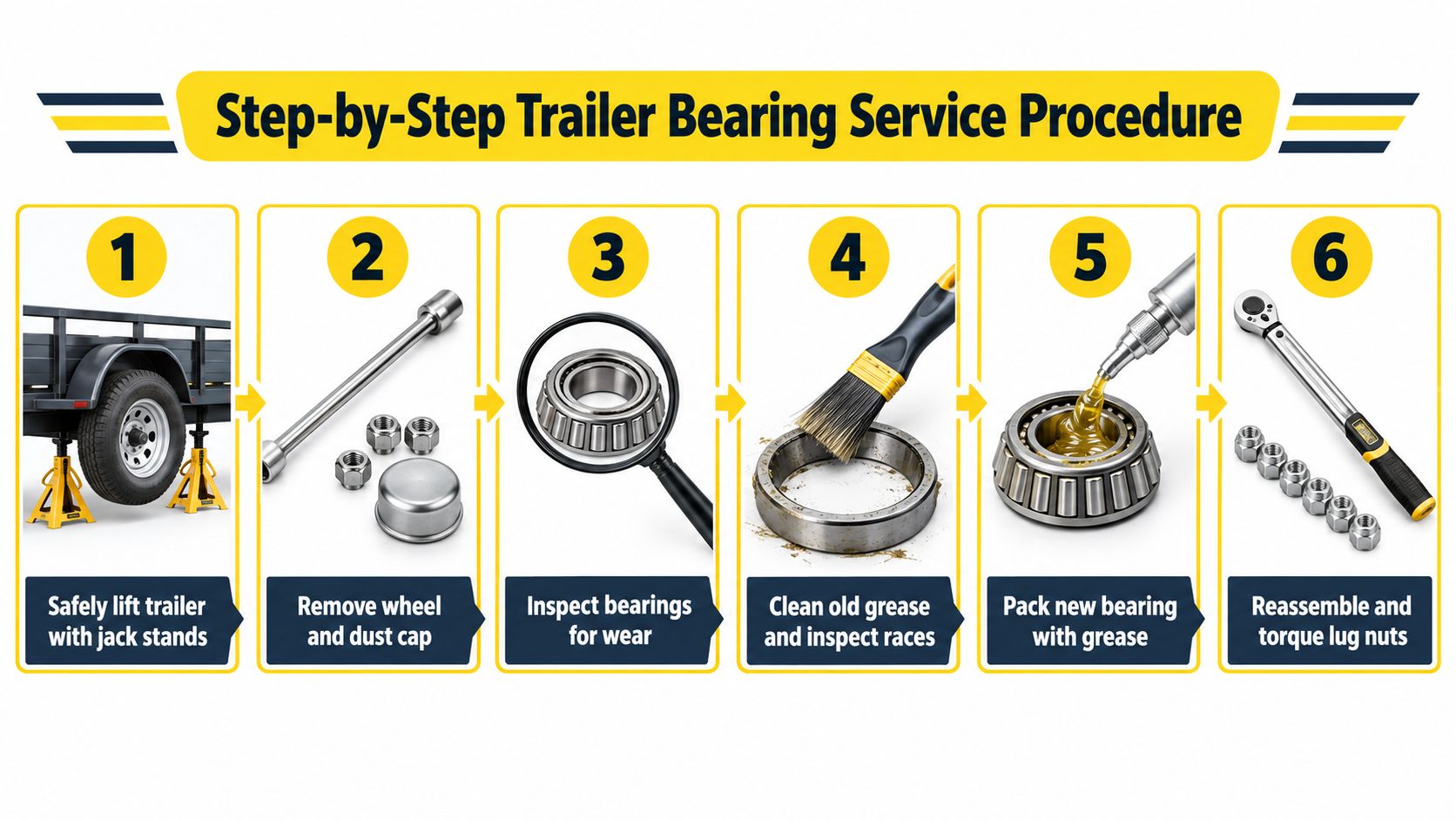
Remove and clean the wheel end the right way
For a conventional serviceable hub, follow the installed axle and hub manual for lifting, support, wheel removal and disassembly. Clean the spindle, bearings, races and hub as that manual specifies, keeping solvent residue, debris and old contaminated lubricant out of the assembly. Timken LV12 provides inspection and cleaning guidance for light-vehicle and boat-trailer applications; it does not replace a heavy-duty axle service manual.
Inspect cleaned rollers and races for pitting, spalling, corrosion, scoring, discoloration and abnormal wear. Follow the installed bearing and axle manufacturer's replacement criteria. Timken LV12 recommends replacing damaged bearing components and their mating components; apply the correct matched bearing and cup requirements for your equipment.
Shop rule: if the bearing or race looks questionable, it's already too late to trust it.
Pack, seal, and set the adjustment correctly
For a conventional grease-lubricated tapered-roller bearing, pack the rollers with the specified compatible grease and install the specified new seal according to the manufacturer's procedure. Fill the hub only to the level required for that design. Timken LV12 light-vehicle and boat-trailer guidance calls for an approximately half-full hub in its covered conventional grease applications and warns against overfilling. Do not transfer that fill rule to oil-bath, sealed, unitized or other hub systems.
Use the procedure for the exact axle and nut system. As a model-specific example, the SAF drum-brake axle service manual, SV11484GB, April 2007 specifies a WAF 85 nut at 150 Nm while rotating the hub, a back-off of 2½ lock-washer holes, the locking pin, and a 400 Nm locknut for the listed SK RS/RZ 6530, 9030, 11030 and RZ 12030 models. Other models use different methods. These values are an example from that manual, not instructions for an unidentified trailer.
Finish with quality control, not guesswork
Record the bearing part numbers, lubricant specification, seal replacement, inspection findings and final adjustment. Where the installed axle or hub procedure requires measured endplay, record the measurement and verify it against that model's specification. A hand check alone does not replace a required dial-indicator measurement. Meritor TP-1268, campaign C11AA, includes measured endplay for its specific TL-series grease-to-oil hub conversion; it is not a general grease-repacking procedure.
Repacking vs Replacing: Making the Right Choice
Not every wheel end needs a full bearing set, but not every bearing deserves another round of grease either. The decision comes down to condition, not optimism. If the rollers and races are clean, smooth, and free of damage, repacking can be the right call. If the parts show heat damage, corrosion, or wear, replacement is the safer choice. The comparison graphic below is illustrative: its cost, labor-time and lifespan figures are not verified quotes, specifications or maintenance intervals. Obtain a model-specific service schedule and repair quote.
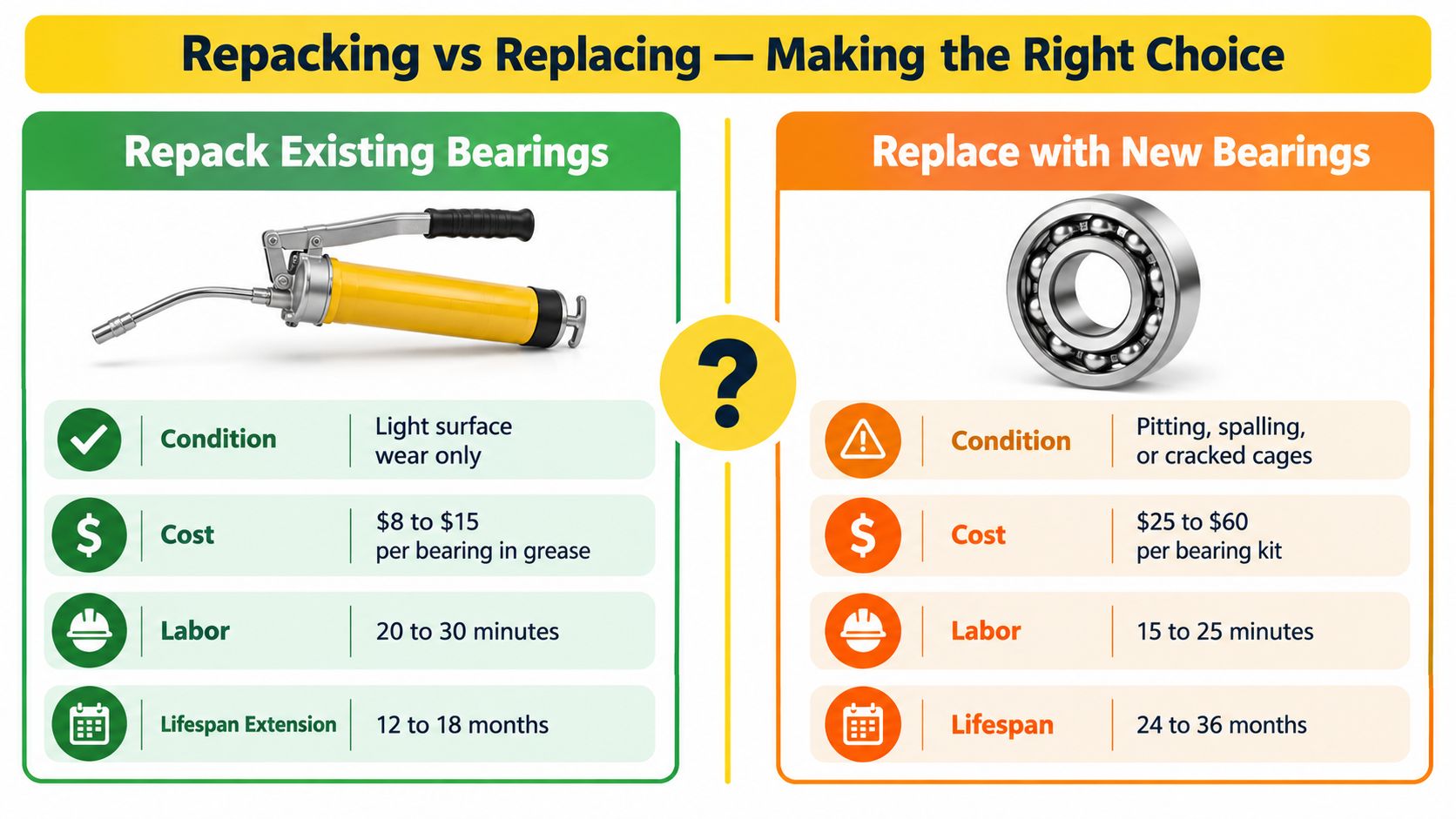
Repack when the metal still looks right
A repack is appropriate only for a conventional serviceable grease-lubricated bearing that meets the manufacturer's inspection and reuse criteria. It is not the procedure for an oil-bath or sealed bearing system. The Dexter axle service manual hosted by NHTSA distinguishes hub and bearing designs, including sealed Nev-R-Lube bearings that do not receive routine repacking. Use the service schedule for the installed design.
Replace when the damage is already there
Replace bearings that fail the installed manufacturer's inspection criteria, including damage such as pitting, spalling, corrosion or heat discoloration. Use the correct matching components and replace seals as instructed. Timken LV12 discusses replacement of damaged bearing components and their mating parts for its light-vehicle and boat-trailer applications; the installed axle manual governs a heavy-duty trailer.
The practical trade-off is downtime versus risk. Repacking takes less parts spend when the components are healthy, but a failed bearing can turn into a hub, spindle, brake, or tire problem if it's pushed too far. Replacing earlier costs more on the bench, but it protects the schedule later.
A bearing that's borderline doesn't get cheaper by waiting.
For fleets that need parts fast, Brothers Truck Trailer Repair and Welding Corp. catalog is the kind of place that matters when the hub is already open and the decision can't wait.
Lubrication, Torque, and Critical Adjustments
More lubricant does not correct an uncertain bearing adjustment. Use the specified lubricant and fill level for the installed hub. Timken LV12 light-vehicle and boat-trailer guidance warns that excessive grease in its covered conventional hubs can increase heat and damage seals. Its approximately half-full recommendation must not be applied to an oil-bath, sealed or different hub design.
Keep the lubricant type consistent
The Dexter HDBI instructions warn against mixing incompatible grease formulations. Identify the specified lubricant before servicing the hub. The 2018 document hosted by NHTSA is a Dexter axle service manual, not a SAF-Holland bulletin. Keep the hub in its intended lubrication system unless the manufacturer provides an approved conversion procedure; sealed bearings require their own instructions.
Set torque by procedure, not habit
Correct adjustment depends on the exact axle, bearing and nut system. The SAF drum-brake axle service manual uses different procedures for different models. Follow the installed equipment's torque, locking and endplay requirements. Check rotation and verify the final adjustment by the method that manual requires, including measured endplay where specified.
Final check: follow the installed manufacturer's rotation and endplay acceptance criteria. A free-rotation or hand-rock check is a useful check only within that procedure and does not replace a specified dial-indicator measurement.
The Terran Axle 2021 recall report submitted to NHTSA connects insufficient spindle-nut torque with vibration and overheating in the affected axles. Correct lubrication and correct adjustment must both be verified for the installed wheel end.
Building a Preventive Maintenance Program
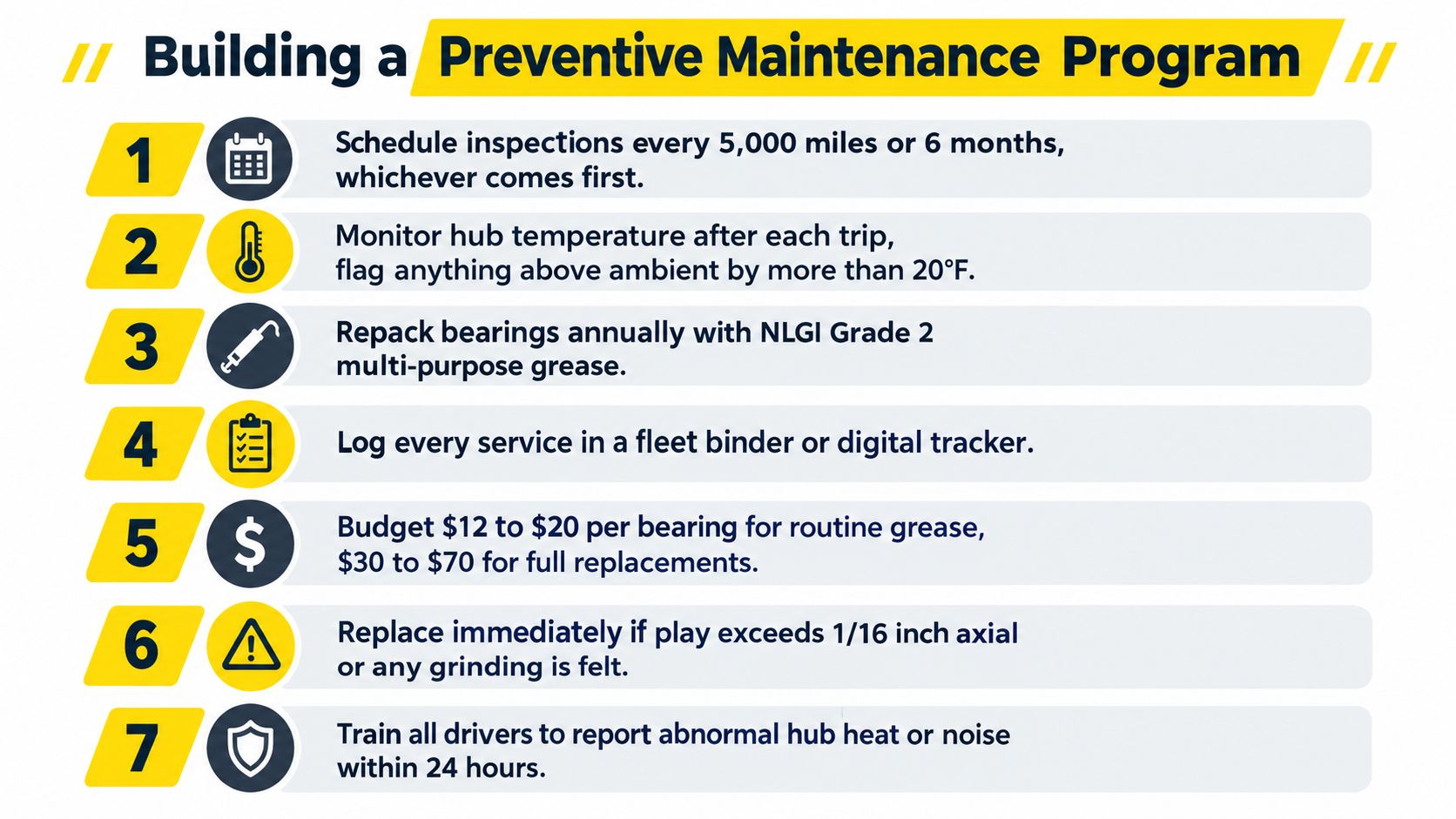
A good preventive program doesn't ask, “Did we grease it this year?” It asks, “What kind of hub is this, what kind of work does it do, and what symptoms have we already seen?” That's how fleets cut repeat failures. The program has to match hub type, duty cycle, and environment instead of using the same interval everywhere.
Build records that tell the next tech the truth
Record the date, axle position, lubricant specification, adjustment procedure, required endplay measurements, seal replacement and bearing or cup changes. The Miller Electric 2010 manufacturer report describes corrective measures for proper hub installation and inspection quality in its affected trailers. Good records help the next technician identify repeat problems and the equipment-specific procedure previously used.
Give drivers a stop-driving rule
Drivers need a clear stop-service rule. If a wheel end has unusual heat, abnormal looseness, grinding, smoke or vibration, stop safely and arrange an inspection before returning it to service. Have leakage or noise assessed promptly according to fleet and manufacturer procedures. The Terran Axle manufacturer recall report illustrates possible consequences of insufficient spindle-nut torque in its affected axles.
If your fleet runs regional routes, heavy loads, washdowns, salt exposure, or repeated stop-start hauling, the wheel-end schedule should be tighter than a basic calendar. Keep the inspection matrix simple enough that a driver, a yard tech, and a service writer can all use it the same way. Consistency is what keeps a bearing problem from becoming a roadside problem.
Brothers Truck Trailer Repair and Welding Corp. works on the exact kind of truck and trailer issues that turn into downtime when wheel ends aren't managed early, from trailer repair and maintenance to parts support and fabrication. If you're trying to keep trailers safe, available, and ready for the next load, visit Brothers Truck Trailer Repair and Welding Corp. and see how their Tampa shop can help keep your equipment moving.
Technical reference for 3500 lbs trailer axles covering GAWR, tire ratings, brake rules, fitment specs, and inspection protocols for commercial fleets.
Learn how etracks in trailer systems work, installation best practices, and repair procedures to keep your cargo secure and compliant on the road.
2-inch ball hitch guide: match the coupler, verify component ratings, inspect mounting and locking hardware, and follow equipment-specific instructions.