Etracks in Trailer: Guide for Fleet Maintenance Teams
You usually notice the problem after the driver calls in from the shoulder, not before. The load looked fine leaving the yard, then a hard brake event, a lane change, or a rough patch of highway exposes a weak rail, a bent anchor, or a fitting that never should've stayed in service.
That's the part many fleets miss with E-track in trailer setups. It isn't a convenience rail like the kind you'd bolt into a shop wall. In a commercial trailer, it becomes part of the cargo-securement structure, which means the rail, fittings, straps, fasteners, and trailer body all have to work together under real road forces. For operators that already live with the realities of Walking Floor upkeep, aluminum repair, and repeated loading cycles, E-track deserves the same respect as any load-bearing system.
Table of Contents
- Why E-track Failures Cost More Than Downtime
- Understanding How E-track Works in Commercial Trailers
- Installation Considerations That Matter for Fleet Trailers
- Choosing the Right E-track Fittings for Your Trailer Type
- Federal Cargo Securement Rules and Trailer Repairs
- Inspection and Maintenance Routines for E-track Systems
- When E-track Repair Requires Aluminum Welding and Fabrication
Why E-track Failures Cost More Than Downtime
A regional fleet out of Tampa Bay can run for weeks with a rail that looks “good enough” until one hard stop turns that judgment into a roadside problem. The cargo might have been packed correctly, but if the E-track was underspecified, fastened into weak paneling, or damaged from repeated bumps with pallets and equipment, the securement system was already losing its margin. That's when freight starts shifting, and the issue becomes safety, schedule disruption, and a repair bill that's bigger than a simple parts swap.
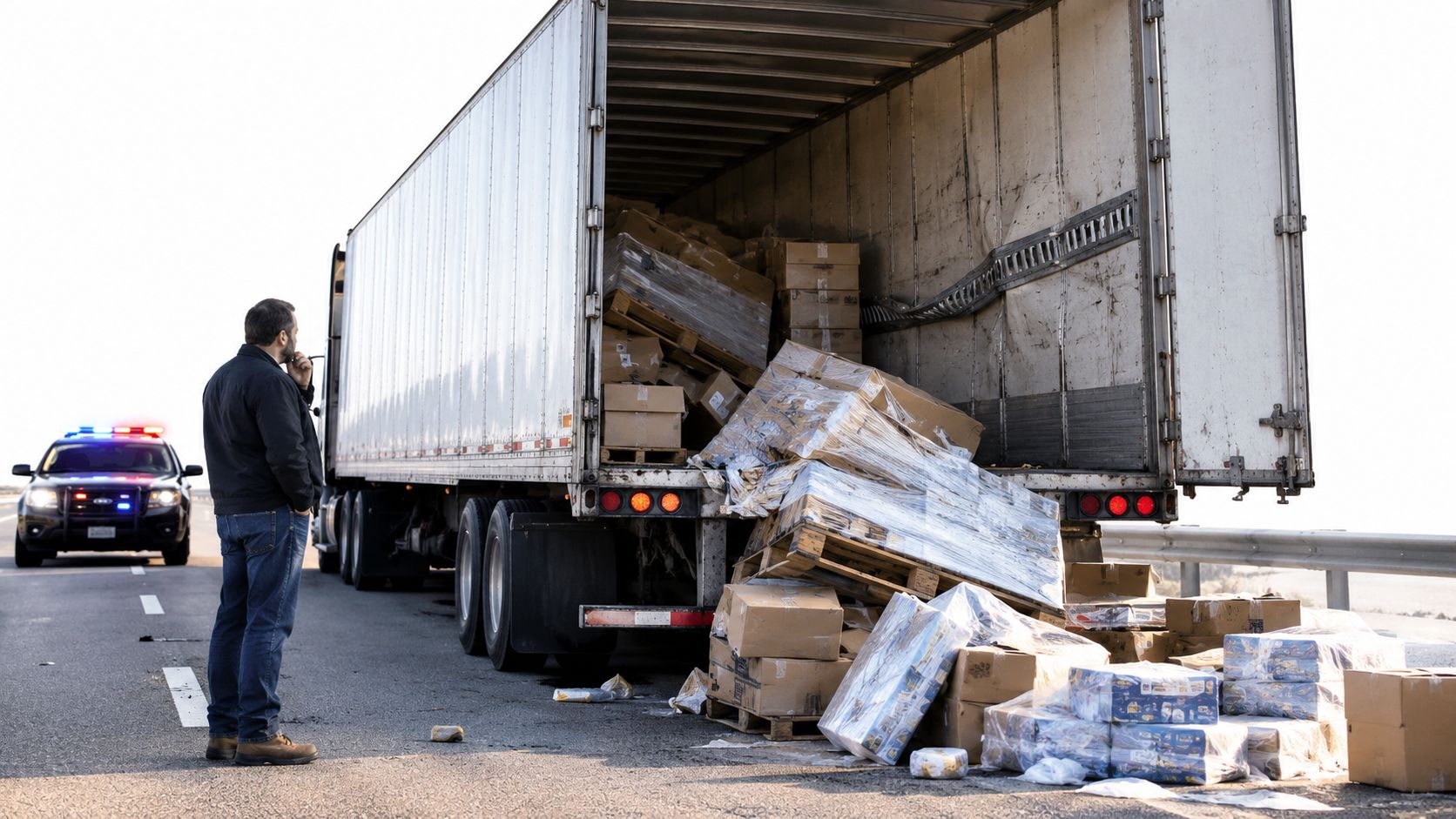
Treat the rail like a load-bearing part
A lot of people still look at etracks in trailer applications as if they're just accessory hardware. That mindset misses the true job of the system. The rail is only one piece of the load path, and if any part of that path is weak, the whole setup loses capacity.
Practical rule: If the cargo moved, the securement system failed somewhere, even if the straps still look usable.
That's why the damage matters even when it looks minor. A bent slot, a loosened end fastener, or a rail that's taken repeated impacts can change how force moves through the wall or floor structure. On a commercial trailer, that's not cosmetic.
Understanding How E-track Works in Commercial Trailers
E-track works because it creates adjustable anchor points, but the rail alone never tells the full story. Federal cargo securement uses the working load limit of the complete system, which means the weak link sets the ceiling. In practice, that weak link might be the rail, the fitting, the fastener, or the trailer substrate.
The complete load path matters
FMCSA requires cargo-securement systems to withstand 0.8 g deceleration forward, 0.5 g acceleration rearward, and 0.5 g lateral acceleration, applied separately. Under the general tiedown rule, the aggregate working load limit of tiedowns securing an article or group of articles must be at least 50% of its weight. For a 10,000-pound article or group of articles, that means an aggregate tiedown WLL of at least 5,000 pounds. This minimum does not replace the applicable performance, tiedown-count, or commodity-specific requirements (FMCSA cargo-securement rules).
That's why the rail, the fitting, the strap or chain, the fasteners, and the trailer body have to be reviewed together. A commercial supplier also points out that there isn't one universal rail rating, because screws, rivets, mounting surface, and structural support all change system strength (E-track product guidance). For aluminum trailers and Walking Floor units, that matters because the substrate around the mount point can be the deciding factor.
What fails first in the real world
After impact damage or years of vibration, the usual trouble spots are easy to spot if you know where to look.
- Elongated holes let fasteners move under load.
- Cracked welds spread stress into nearby metal.
- Corrosion reduces the grip between rail and structure.
- Substrate separation means the rail is no longer tied into the body the way it should be.
The right fix is usually not “swap the visible fitting and call it done.” If the surrounding structure is weakened, the replacement can transfer force into a bad mounting area and repeat the failure.
Installation Considerations That Matter for Fleet Trailers
Good installation starts before the first hole is drilled. A rail mounted to thin wall skin won't behave the same way as one tied into a frame member, crossmember, or other structural support. On aluminum-bodied trailers, that difference is everything, because the surrounding structure has to share the load instead of absorbing it in one soft spot.
Mount into structure, not just surface
The first decision is the mounting surface. If the installer treats the wall like decorative paneling, the rail will eventually tell the truth on the road. Structural support matters more than a clean appearance, and it matters more than how easy the job looked during install.
The next issue is fastener choice. Screws, rivets, and mounting hardware all behave differently under vibration and shock. The correct choice depends on the trailer design and the specific fitting being used, not on habit. A shop should verify the manufacturer's rating for the exact setup instead of assuming one rail size works everywhere.
Shop standard: If the trailer structure can't support the anchor, the anchor is wrong, even if the rail itself is new.
Watch the repair details that create callbacks
Used trailers and hard-work fleets usually come in with mounting areas that already have problems. Corroded substrate, damaged panels, or old repair patches can hide weak spots under the surface. That's where aluminum welding and fabrication become part of the installation decision, because a clean rail on a bad mounting area still fails.
For shops that handle trailer repair alongside body work, the practical order is simple. Inspect the structure, reinforce what needs support, and only then mount the rail. If the installation pattern concentrates stress around one anchor point, the trailer will usually show it through loosened hardware, damaged slots, or repeated movement at the same location.
Choosing the Right E-track Fittings for Your Trailer Type
Different fittings solve different problems, and the wrong combination can create new ones. A self-cleaning fitting that works well in a high-cycle fleet trailer may be a poor choice if the load needs a more rigid tie point. Ratchet straps, load bars, corner posts, and tensioners all have a place, but they don't all work the same way under vibration, side load, and repeated use.
Match the fitting to the freight and the trailer
Ratchet straps are the everyday workhorse when cargo needs direct restraint and frequent adjustment. Load bars make more sense when you need to brace freight across the trailer body or keep items from shifting into the aisle. Corner posts and tensioners help in setups where you're managing stacked cargo or dividing the space into secure zones.
Walking Floor operators usually care less about convenience and more about repeatability. If the load comes in and out often, the fitting has to survive constant handling without wearing out the rail. Aluminum box trailers need the same discipline, because a strong fitting can still overwork a weak anchor area if the whole setup wasn't planned correctly.
Side-by-side buying logic
| Fitting type | Best use | Main risk if mismatched |
|---|---|---|
| Ratchet strap | Flexible daily securement | Overloading weak anchor points |
| Load bar | Cross-bracing and load separation | Poor fit if the cargo shape changes often |
| Corner post | Stabilizing stacked freight | Concentrated force at a single point |
| Tensioner | Maintaining consistent restraint | False confidence on a damaged rail |
For parts selection and repair planning, keep the trailer type in view and don't let one broken piece dictate the whole solution. Brothers Truck Trailer Repair and Welding Corp. catalog is the kind of place fleets typically check when they need both parts matching and repair coordination in the same workflow.
Federal Cargo Securement Rules and Trailer Repairs
Federal rules don't treat E-track as decorative hardware. Under 49 CFR § 393.104, tiedowns, fittings, anchor points, and related parts have to stay in proper working order, and damage such as cracks, cuts, deformation, corrosion, or any condition that reduces working load limit removes the part from service (49 CFR § 393.104). That makes trailer E-track a repair issue, not just a maintenance preference.
The compliance standard is about condition, not appearance
A rail can look straight and still be unsafe if the fasteners are loose or the substrate has started to separate. The federal standard exists because cargo securement fails at the connection points, not just at the obvious break. That's why bent anchor points, missing hardware, and weakened surrounding panels are safety-critical defects.
The aggregate WLL is calculated from the tiedowns and their attachment paths, not by adding the ratings of a rail, fitting, and strap connected in series. Under 49 CFR § 393.106(d), count one-half of a tiedown's WLL when it connects the vehicle to an anchor on the cargo, or passes through, over, or around the cargo and returns to the same side of the vehicle. Count its full WLL when it passes through, over, or around the cargo and connects to the opposite side of the vehicle. The installed rail, fittings, fasteners, and trailer structure must still support the required loads; a higher-rated strap cannot compensate for a weaker connection (FMCSA aggregate WLL guidance).
The general requirements in § 393.106 exclude bulk commodities without a fixed shape, such as grain, sand, or gravel, when carried in a tank, hopper, box, or similar device forming part of the vehicle structure. Do not automatically apply the article-and-tiedown calculation to every Walking Floor load: identify the cargo and containment arrangement, then follow the applicable rules and the trailer manufacturer's instructions.
Why repair decisions change under federal rules
If a trailer comes in with damage around the track, the repair choice has to follow the rulebook as well as the wrench. A strong new fitting on a compromised panel can make the weak area fail faster. The right fix is the one that restores the complete securement system, not the one that only makes the trailer look serviceable.
That's also why trailer-repair crews need to treat visible damage as a warning sign, not a cosmetic problem. If a tiedown or fitting is compromised, the cargo doesn't care how fresh the paint looks. The load responds only to what is holding it.
Inspection and Maintenance Routines for E-track Systems
Before operating a commercial motor vehicle, the cargo must be properly distributed and adequately secured. For drivers of trucks and truck tractors subject to 49 CFR § 392.9(b), inspect the cargo and securement devices within the first 50 miles of a trip and reexamine them at a change of duty status, after 3 hours of driving, or after 150 miles, whichever occurs first, making necessary adjustments. Paragraph (b)(4) exempts drivers of sealed commercial motor vehicles who have been ordered not to open them to inspect the cargo, and drivers whose cargo has been loaded in a manner that makes inspection impracticable. These exceptions do not eliminate the general cargo-securement requirements. Include accessible E-track and its mounting structure in the inspection when applicable (49 CFR § 392.9).
Build the inspection around what actually moves
Loose fasteners are the first thing I'd look for after a trailer has been bouncing around a jobsite or yard. Worn straps, deformed fittings, and cracks around the anchor points matter just as much, because they show where the force has already been concentrating. If the substrate is separating, the rail may still be attached, but it isn't secure.
A useful walk-around can stay simple if the team knows what it's checking.
- Fastener condition: Look for looseness, elongation, and missing hardware.
- Rail shape: Check for bends, slot damage, and impact marks.
- Fittings and straps: Pull anything worn, twisted, cracked, or frayed.
- Mounting area: Watch for panel separation, corrosion, or cracking around the anchor.
Keep the system honest under fleet use
Recurring cargo shifts accelerate wear. A load that slides, bumps, or slams into the same section of rail doesn't just punish the fitting, it beats up the structure around it too. That's why maintenance procedures need to treat E-track in trailer service as part of structural securement, not as an add-on that gets checked only when someone remembers.
If the trailer sees regular roadwork, make the inspection sequence part of dispatch discipline. It's cheaper to catch a loosening fitting at the yard than to explain a shifted load after a roadside stop.
When E-track Repair Requires Aluminum Welding and Fabrication
There's a point where replacement parts aren't enough. If the mounting area is cracked, the welds around the rail are damaged, or the substrate has corroded away, the repair turns into aluminum welding and fabrication work. That's especially true on trailers where the track is mounted into body paneling or a custom structure that carries more than one function.
Cosmetic damage isn't the issue
A scuffed rail doesn't automatically mean failure. A rail with damaged support metal behind it does. Once the surrounding structure has weakened, the securement system can't be trusted to hold the same way it did before, even if the visible hardware looks acceptable.
That distinction matters on fleet trailers, especially Walking Floor and aluminum units that already depend on precise structural integrity. A patch over a compromised mount area might buy time, but repeated patching often hides the underlying problem instead of fixing it. The better repair is the one that restores the metal around the anchor point so the rail can do its job again.
When the substrate is weak, the rail becomes the messenger, not the problem.
For fleets that want their securement work tied to broader trailer repair capability, Brothers Truck Trailer Repair and Welding Corp. fits that kind of workflow because the same trailer often needs parts, fabrication, and repair judgment in one visit. That's the practical way to keep a trailer road-ready without bouncing it between shops for each separate defect.
If your trailer has worn E-track, damaged anchors, or mounting areas that need more than a quick bolt-in fix, get it looked at before the next load goes out. Brothers Truck Trailer Repair and Welding Corp. handles trailer repair, aluminum welding, fabrication, Walking Floor work, and parts support for fleets that can't afford repeat failures. Visit Brothers Truck Trailer Repair and Welding Corp. and line up a repair path that treats your securement system like the safety component it is.
Technical reference for 3500 lbs trailer axles covering GAWR, tire ratings, brake rules, fitment specs, and inspection protocols for commercial fleets.
Master trailer wheel bearings maintenance with expert steps for inspection, repacking, and replacement. Reduce downtime and prevent costly failures today.
2-inch ball hitch guide: match the coupler, verify component ratings, inspect mounting and locking hardware, and follow equipment-specific instructions.