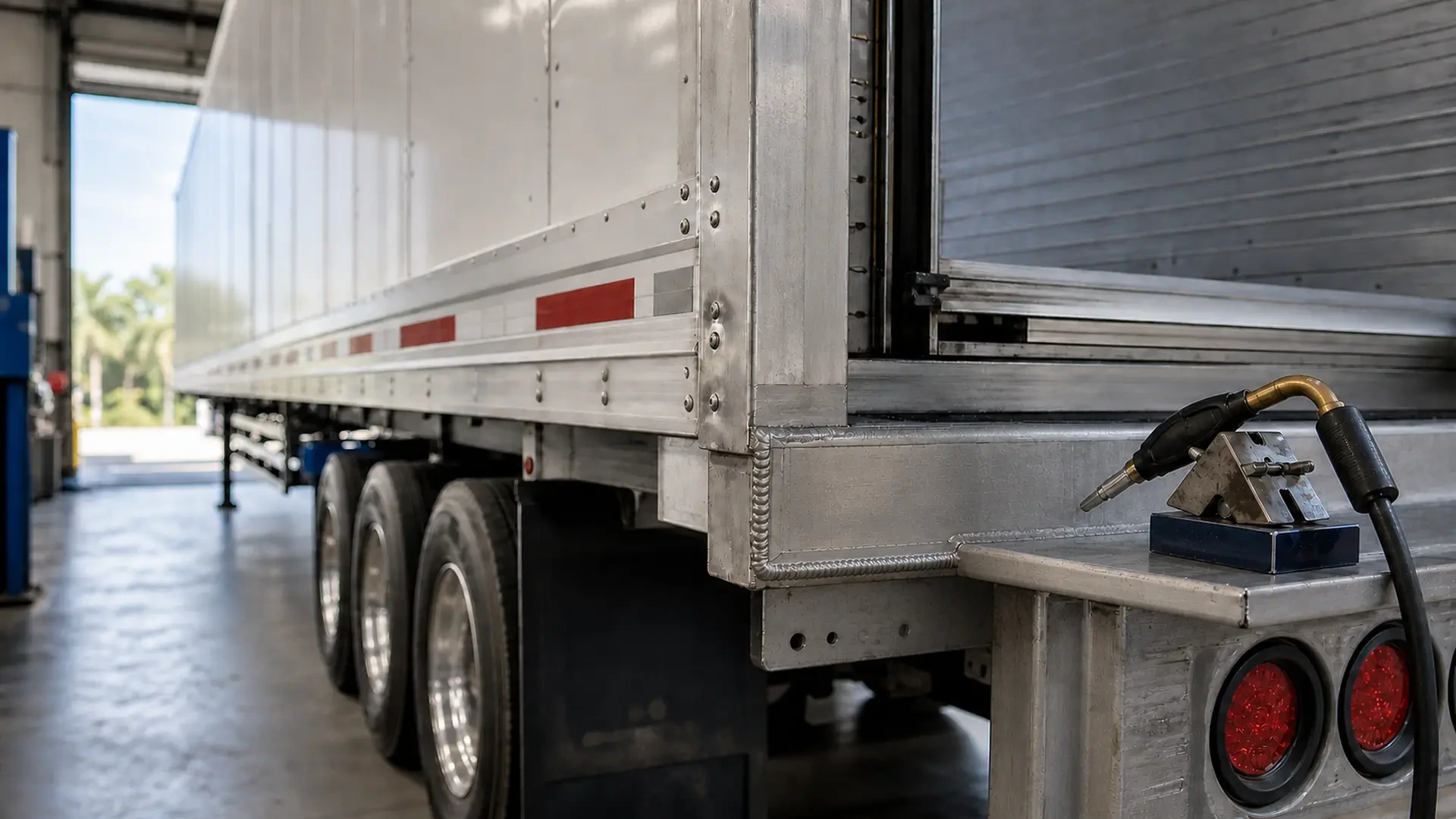
Walking Floor repair and welding in Tampa: what service may include
A Walking Floor problem is not always isolated to one part of the trailer. Slow movement may involve the hydraulic system, but resistance in the slats or a structural alignment issue can create a similar symptom. An aluminum crack may need welding, but the stress that produced it may also involve movement, impact or worn supporting components.
That is why an effective service visit starts with the complete operating symptom rather than a request to replace or weld one part. Brothers Truck Trailer Repair and Welding Corp. provides Walking Floor diagnosis, repair, aluminum welding and component support from its Tampa workshop.
When to request Walking Floor service
Request an inspection when the system develops a change in movement, sound, alignment or visible condition. Common reasons to contact the shop include:
The floor hesitates, jerks or stops before completing a cycle.
One group of slats moves differently from the others.
Hydraulic fluid is visible around a hose, connection, valve or cylinder area.
A new vibration, scraping sound or rubbing mark appears.
A slat, guide, bearing area or floor section looks worn or out of position.
Aluminum around the floor, side structure or support area is cracked or deformed.
A previous repair has not corrected the operating symptom.
The unit needs a preventive inspection before the next operating period.
These signs do not identify one failed component. They provide a starting point for evaluating how the hydraulic, mechanical and structural parts of the system are working together.
What information helps before the trailer arrives
A clear description helps the shop understand the concern before the physical inspection begins. Record what can be observed safely without reaching into moving equipment or handling pressurized hydraulic components.
Useful information includes:
Whether the symptom occurs during loading, unloading or both.
Whether the trailer is loaded or empty when the problem appears.
Which floor section moves first, late or not at all.
Any new leak, noise, vibration, rubbing or visible damage.
The cargo being handled when the symptom began.
Recent hydraulic work, welding or component replacement.
Trailer and Walking Floor system information that is available.
Clear photos and, when safe, one short video of the symptom.
Do not repeatedly cycle the system to create more evidence. If the movement looks unsafe, the floor is binding or a hydraulic leak is present, stop the observation and request professional guidance.
Hydraulic diagnosis and repair
The hydraulic system creates and coordinates the force that moves the floor. Depending on the complaint, a service inspection may consider:
Hydraulic hoses, lines and connections.
Visible fluid loss or damaged fittings.
System response and pressure behavior using appropriate equipment.
Control, check and switching valve operation.
Cylinder condition and coordinated movement.
Signs of restriction, wear or inconsistent flow.
A slow or irregular floor does not automatically mean a particular valve or cylinder should be replaced. The configuration, measurements and behavior of the complete system should be checked before selecting a part or defining the repair.
Floor slats, bearings and moving components
Walking Floor slats move across supporting and guiding components. Wear, debris, deformation or changed alignment can add resistance even when the hydraulic system is producing force.
The inspection may include:
Slat position, surface condition and damaged edges.
Bearings, guides and hold-down components.
Areas where material has accumulated.
New contact points, polished marks or metal debris.
Gaps or sections that no longer align with adjacent parts.
Hardware that appears loose, worn or deformed.
Correcting the source of resistance matters because replacing a hydraulic part will not resolve a floor that is physically binding.
Aluminum welding and structural repair
Walking Floor trailers use aluminum in areas exposed to cargo load, movement, vibration and impact. When a crack or deformation appears, the repair plan should consider the location and the condition around it.
Before welding, the shop may review:
The direction and visible extent of the crack.
Deformation, impact marks or recurring damage.
Nearby floor movement and alignment.
Rubbing between components.
Previous welds or modifications.
Access needed to prepare and complete the repair.
Welding repairs damaged metal, but it does not automatically remove the stress or movement that caused the damage. Evaluating the structure and the operating symptom together helps define whether the work is localized or connected to a broader Walking Floor repair.
Parts identification and component support
The Brothers Truck Trailer catalog presents Keith® Walking Floor component categories such as valves, cylinders, seal kits, piston assemblies and bearings. A catalog image or component name alone may not be enough to confirm the correct part.
When a replacement may be needed, have the following available:
Photos of the installed component and its connections.
Legible labels or part numbers.
Measurements requested by the shop.
Trailer and system information.
A description of the operating symptom.
Details about recent repairs or replacement parts.
Availability, compatibility, price, ordering conditions and applicable warranty terms must be confirmed directly with the shop. The catalog does not by itself establish current inventory or authorized distributor status.
Why one inspection may involve more than one service
A Walking Floor can present connected problems. For example:
A damaged slat may create resistance that changes hydraulic behavior.
Misalignment may produce rubbing and eventually contribute to an aluminum crack.
A hydraulic issue may result in inconsistent movement that places unusual stress on floor components.
Cargo buildup may increase resistance and hide wear or damage.
The objective is not to make every repair larger. It is to separate the visible symptom from its cause and define only the work the unit actually needs.
Preparing for a visit to the Tampa workshop
Before bringing the trailer, contact Brothers Truck Trailer and describe the symptom, trailer condition and service needed. Ask how the unit should be presented, especially if it is loaded, leaking, unable to complete a cycle or affected by structural damage.
Bring available system information, photos, recent service records and part details. Do not remove, grind, clean or cover a damaged area if doing so could hide useful inspection evidence.
Brothers Truck Trailer Repair and Welding Corp. is located at 1620 S 51st St, Tampa, FL 33619.
If your Walking Floor needs diagnosis, hydraulic repair, floor service or aluminum welding, call Brothers Truck Trailer to discuss the problem and arrange service at the Tampa workshop.

Expert commercial trailer repair in Tampa for Walking Floor, aluminum welding, and fleet maintenance. Minimize downtime with Brothers Truck Trailer Repair.

Preventive maintenance for commercial trailers: inspection checklists, Walking Floor care, aluminum repairs, and fleet service in Tampa Bay.
Master walking floor trailer hydraulic troubleshooting with expert diagnostics, safety protocols, and repair strategies to minimize fleet downtime.