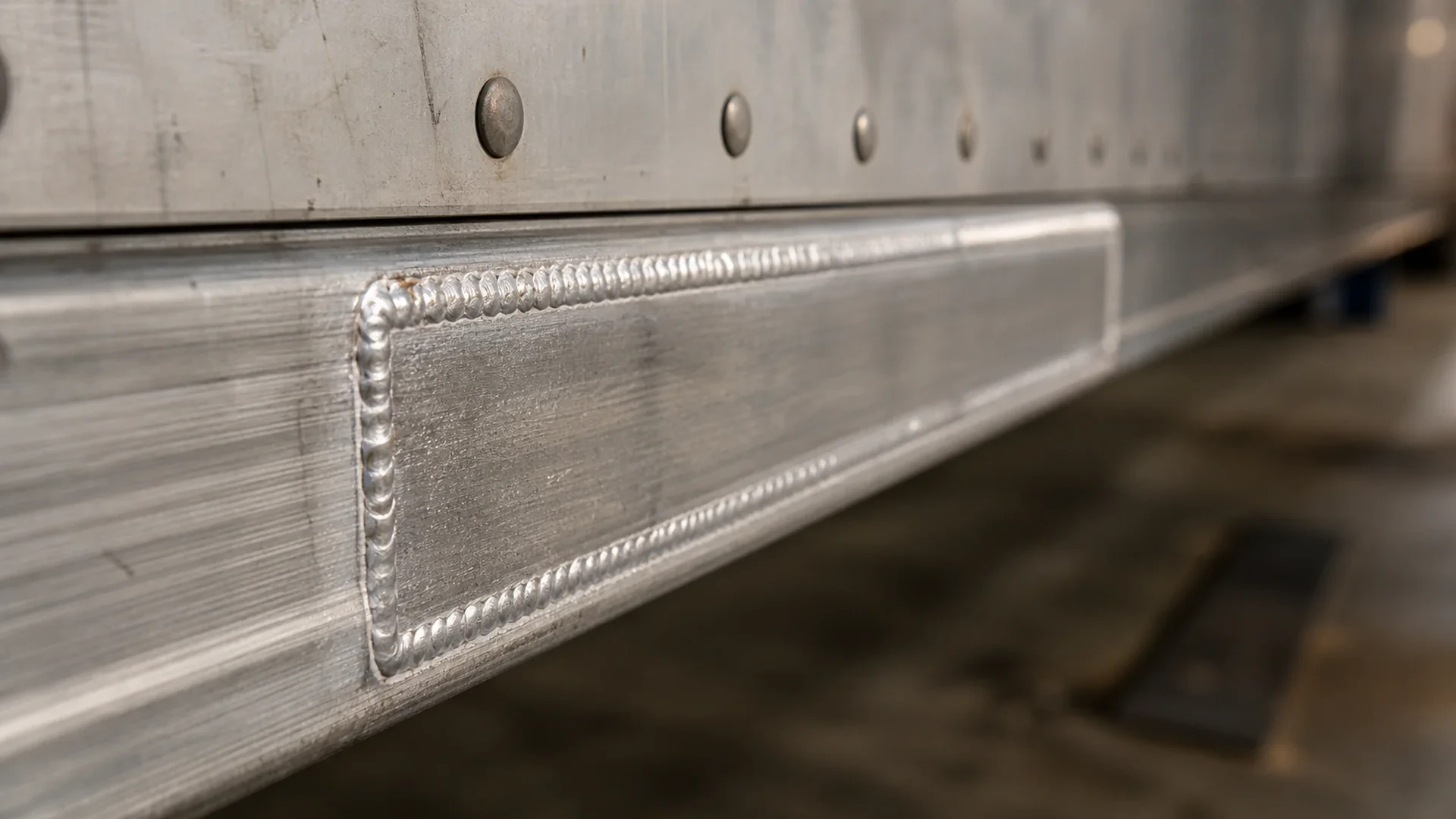
Quick guide to trailer welding repair: inspection and preparation
A trailer welding repair should begin with an inspection, not with a welding process selected from a photo. The shop first needs to understand the damaged material, its location, the surrounding condition and what happened before the crack, separation or deformation became visible.
A photo may help start the conversation, but it cannot confirm the cause or final repair scope. Brothers Truck Trailer Repair and Welding Corp. provides trailer repair, aluminum welding, fabrication and Walking Floor service from its workshop at 1620 S 51st St, Tampa, FL 33619.
This guide explains what to document, what an inspection may consider and how to prepare a useful service request.
What is trailer welding repair?
Trailer welding repair is work performed on damaged metal areas after the condition and repair requirements have been evaluated. Depending on the trailer and damage, welding may be part of a localized repair, fabrication work or a broader trailer service.
The visible opening is not the only consideration. The repair plan may also need to account for:
The material and construction of the affected area.
Crack direction, separation or missing material.
Deformation around the damage.
Access needed to prepare and reach the area.
Previous welds or modifications.
Contact, rubbing, impact or changed alignment nearby.
The way the trailer or a connected component is operating.
The correct approach depends on the physical inspection. It should not be selected from a generic photo or assumed from the size of the crack alone.
Common reasons to request a welding inspection
A crack has appeared in metal or near a previous weld
Record the location and whether the crack is new, growing or recurring. A previous repair is important history, but a recurring line does not by itself identify why the damage returned.
An area is bent, separated or no longer aligned
Deformation may change how adjoining surfaces meet or move. Include a wide photo that shows the complete area, not only a close-up of the damaged edge.
New rubbing or contact marks are visible
Polished metal, scraping or residue can help identify where components are making contact. Do not operate equipment or reach into confined areas solely to reproduce the mark.
Damage appeared after an impact
Describe the event, affected side and any operating change noticed afterward. Avoid assuming that the visible crack is the full extent of the condition.
A Walking Floor trailer shows cracking with movement changes
A Walking Floor combines hydraulic power, moving slats, mechanical support and trailer structure. If a crack appears with uneven movement, rubbing, vibration or changed alignment, report both symptoms so they can be considered together.
What to document before contacting the shop
The exact location
Identify the affected section in plain language. Include trailer identification and any component labels that can be photographed safely.
A close view and a wide view
The close image shows the crack, opening or damaged edge. The wide image shows nearby seams, supports, fasteners, contact marks, previous welds and the position of the area on the trailer.
When the damage became visible
Note the approximate date, whether the trailer was loaded or empty and what it was doing when the condition was noticed. If there was a change over time, describe the sequence.
Related operating symptoms
Tell the shop about noise, vibration, rubbing, leakage, uneven movement or a component that changed position. These observations help define the inspection; they do not confirm a cause.
Previous repairs and maintenance
Include recent welding, fabrication, replacement parts, impact work or service near the area. Share records or authorized photos when available.
What may happen during a trailer welding inspection?
The inspection is specific to the unit and damaged location. The shop may evaluate:
The visible damage and the condition of its edges.
The surrounding metal for deformation, contact or additional visible changes.
Earlier welds, repairs or modifications near the area.
Trailer operation or component movement related to the complaint.
Access, preparation and fabrication needs.
Whether the work fits the shop’s confirmed trailer-repair and aluminum-welding services.
After the condition is evaluated, the shop can discuss the proposed scope. Availability, timing, price, materials and any applicable commercial terms must be confirmed directly for the specific job.
Why inspection should come before the weld
Closing the visible crack may not correct deformation, rubbing, changed alignment or a connected operating problem. Conversely, an inspection may confirm that the issue is localized and does not require a broader correction.
The purpose of inspecting first is not to assume the largest repair. It is to distinguish the visible damage from the condition that produced it and define only the work supported by the unit’s actual state.
Aluminum welding and Walking Floor trailers
Brothers Truck Trailer lists aluminum welding and Walking Floor repair among its confirmed services. On a Walking Floor trailer, metal damage can appear near moving floor sections, panels, supports or other areas exposed to operation and cargo handling.
When the floor also hesitates, moves unevenly, rubs or stops before completing a cycle, include that behavior in the request. Welding may address the damaged metal, while a separate inspection may be needed to understand hydraulic, mechanical or alignment-related symptoms.
Do not order a replacement part or request one isolated repair based only on appearance. Provide the system information and let the inspection guide the next step.
What not to do before trailer welding service
Do not grind, polish, paint or seal the damaged area before it is documented.
Do not repeatedly load, unload or cycle equipment to make the symptom visible.
Do not attempt to straighten metal without understanding the affected area.
Do not select a welding method or replacement component from a photo alone.
Do not continue operation when the damage or movement appears unsafe; request guidance first.
Preserving the original condition gives the shop better information for the initial evaluation.
How to prepare for service at the Tampa workshop
Before bringing the trailer, call and describe:
The trailer and affected location.
The visible crack, separation or deformation.
Any noise, vibration, rubbing, leak or movement change.
Whether the unit is loaded or empty.
Recent impact, welding, fabrication or component work.
Available photos, identification and service records.
Ask how the trailer should be presented, especially when it is loaded, difficult to move or affected by a condition that may make continued operation unsafe.
Brothers Truck Trailer Repair and Welding Corp. is located at 1620 S 51st St, Tampa, FL 33619. Call +1 (813) 750-6380 or email [email protected] to discuss a trailer welding inspection.
Send clear photos and a factual description of the damage, then call Brothers Truck Trailer at +1 (813) 750-6380 to discuss trailer welding repair at the Tampa workshop.
Technical reference for 3500 lbs trailer axles covering GAWR, tire ratings, brake rules, fitment specs, and inspection protocols for commercial fleets.
Learn how etracks in trailer systems work, installation best practices, and repair procedures to keep your cargo secure and compliant on the road.
Master trailer wheel bearings maintenance with expert steps for inspection, repacking, and replacement. Reduce downtime and prevent costly failures today.