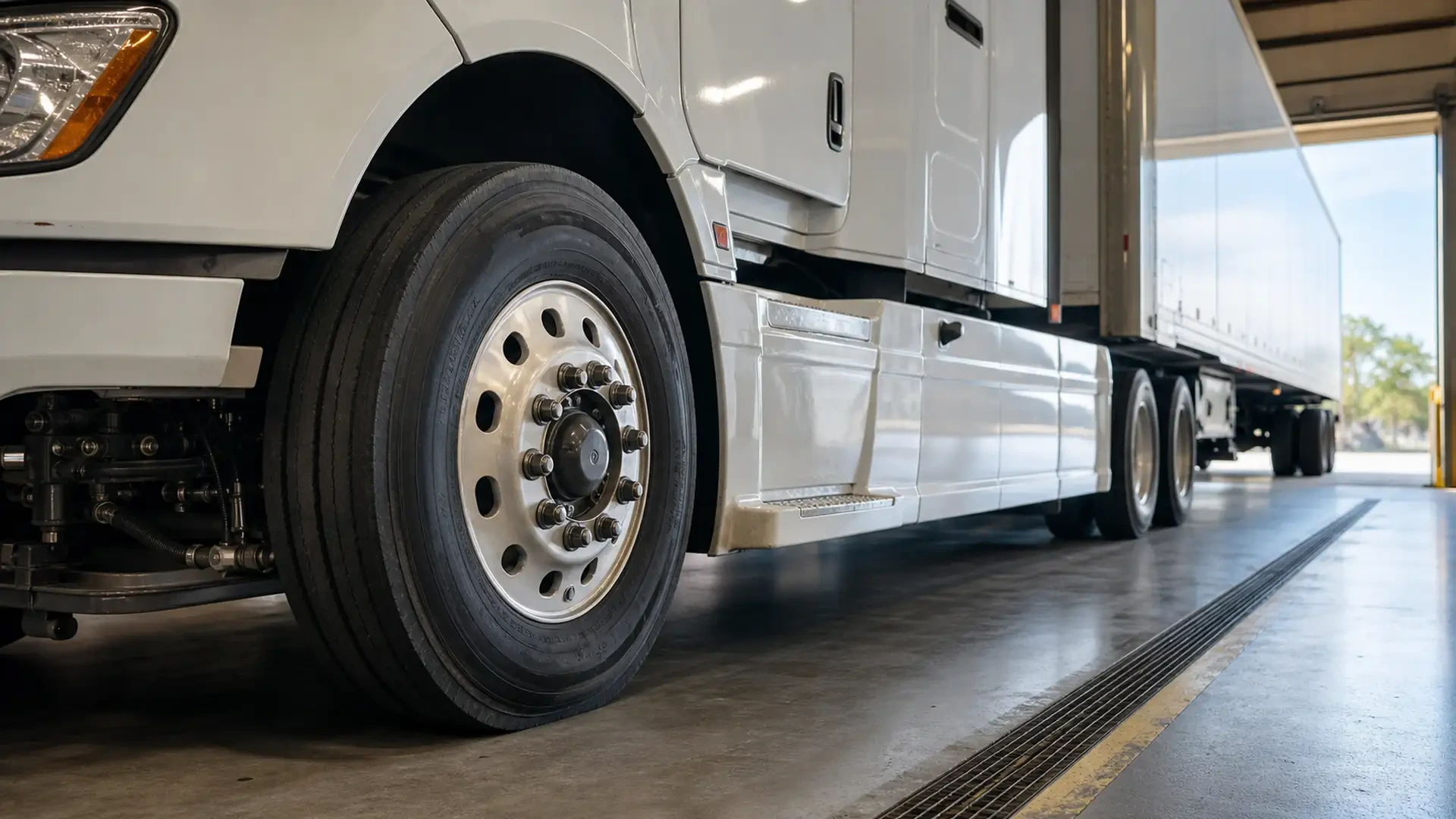
Preventive maintenance checklist for trucks: what to review before service
A preventive maintenance checklist for trucks is most useful when it turns observations into a clear service conversation. It should help an owner, driver or fleet manager record what changed, where it appeared and what the unit was doing when the change was noticed.
The checklist does not replace a professional inspection or confirm that a truck or trailer is safe to operate. It helps organize information before a planned visit and makes it easier to explain a new leak, wear pattern, noise, crack, movement change or previous repair.
Brothers Truck Trailer Repair and Welding Corp. provides truck maintenance, trailer repair, Walking Floor service, aluminum welding, fabrication and parts assistance from its workshop at 1620 S 51st St, Tampa, FL 33619. Use the sections below to prepare a practical record before contacting the shop.
What a preventive maintenance checklist can do
A good checklist can help you:
Capture the unit’s identification and recent operating context.
Notice visible changes before they become harder to describe.
Separate a routine observation from a fast-changing symptom.
Record recent maintenance, welding, impact or component work.
Prepare photos and notes that give the shop a useful starting point.
Decide what information to share when requesting a scheduled evaluation.
It cannot diagnose a mechanical, hydraulic or structural condition from a list alone. The repair scope, timing, parts compatibility and cost must be confirmed for the specific unit after the appropriate evaluation.
1. Record the truck and trailer information
Start every inspection record with information that identifies the unit. Include:
Truck or trailer type, make, model and year when available.
Fleet or unit number.
Walking Floor, hydraulic or other system information visible from a safe position.
Approximate mileage or operating hours if your fleet already records them.
Current load condition: loaded, empty or not applicable.
Date and location of the observation.
If a label, serial number or component marking is visible without removing a cover or entering a service area, photograph it for the record. Do not dismantle a component to complete the checklist.
2. Note recent changes and operating conditions
Preventive maintenance records are more useful when they describe the circumstances around an observation. Note:
What the unit was doing when the change appeared.
Whether the symptom occurs every time or only under a particular condition.
Whether it began suddenly, developed gradually or returned after a repair.
Recent loading, unloading, impact, welding, fabrication or component work.
Unusual weather, cargo material or operating conditions only when they are relevant to the observation.
Use factual language. “A rubbing mark is visible near the left rear section” is more useful than deciding that a particular part has failed before it has been inspected.
3. Complete a safe exterior walk-around
With the unit parked and secured according to your operating procedure, review visible areas without reaching near moving, hot or pressurized components. Mark each item as observed, not observed or requires professional review.
Structure and body
New crack, split, bent edge or deformation.
Loose, separated or displaced panel or support.
Previous weld or repair that looks different from the last record.
New rubbing, polished contact mark, scrape or metal residue.
Corrosion or surface change that is spreading or returning.
Wheels, suspension and brake areas
Visible damage, unusual wear or displaced components.
Leaks or fluid residue near a component.
New noise, vibration or change in how the unit sits or moves.
Do not place your hands near a suspected failure or crawl under a unit to improve an observation. If an area cannot be checked safely, mark it for the shop.
4. Check fluid and hydraulic observations without touching pressurized parts
Record whether you see a new wet area, drip, spray, residue or hose contact. Include the approximate location and whether the condition appeared before or after a change in operation.
For a Walking Floor trailer, note any visible fluid near hoses, fittings, valves or cylinder areas from a safe position. A wettest point is not always the source of a leak, and fluid on a surface does not by itself identify the failed component.
Do not loosen fittings, wipe a suspected leak, cycle a system repeatedly or touch a pressurized line to gather more information. Stop and request guidance if there is active leakage, unexpected movement or a condition that could make operation unsafe.
5. Review Walking Floor behavior
If the trailer has a Walking Floor, record how the complete floor behaves rather than naming a replacement part. Look for:
Uneven movement or a section that falls behind.
Pauses, incomplete cycles or a change in normal sequence.
New rubbing, scraping, vibration or sound.
Different spacing or height between slats.
Material buildup or metal residue in a visible area.
A symptom that appears loaded, empty or in both conditions.
Only record a video if it can be made safely from outside the movement path. Do not activate the floor repeatedly to reproduce a symptom that appears restricted, unstable or unexpected.
6. Review truck maintenance observations
For the truck itself, use the record to organize visible or reported changes related to routine service. Depending on the unit and the requested work, note:
Fluid levels or visible leaks that require professional attention.
Brake or suspension observations that look different from the previous record.
Warning lights or changes in engine operation reported by the driver.
Changes in steering, braking, vibration or handling.
Service completed, deferred or recommended during the previous visit.
The checklist is a communication aid, not a substitute for the manufacturer’s procedures, a required inspection or a qualified assessment of the vehicle.
7. Add photos and supporting records
When it is safe to do so, capture a consistent set of images:
A wide image showing the unit and the location of the observation.
A section image showing nearby supports, seams, hoses or components.
A close image of the crack, wear, leak trace or contact mark.
An identification image showing a label or number that can be photographed safely.
A comparison image from a similar area when it helps show the difference.
Keep the original files and add the date, unit number and location to your notes. Do not grind, paint, seal, clean away residue or disassemble the area before it is documented unless the responsible professional instructs you to do so.
8. Classify the next step
Use the record to choose a communication path, not to make a remote diagnosis.
Plan a preventive visit
A planned visit may be appropriate when the observation is stable, gradual and not affecting operation. Share the record and ask what the shop needs before the unit arrives.
Request prompt guidance
Contact the shop promptly when a crack is changing, a leak is active, a component is displaced, a Walking Floor is binding or movement has changed unexpectedly. Stop observing from a distance if continuing operation could increase risk.
Stop and seek professional direction
Do not continue operation solely to gather more information when there is severe vibration, unexpected movement, a structural concern, active hydraulic leakage or another condition that appears unsafe. The shop can help define the next step for the specific unit.
How to prepare for a Tampa workshop visit
Before calling, have the unit information, checklist, photos and recent repair history available. Explain the observation in this order:
What changed.
Where it appears.
When it happens.
Whether the unit is loaded or empty.
What work or impact occurred beforehand.
Whether the condition is stable, recurring or getting worse.
Brothers Truck Trailer can discuss truck maintenance, trailer repair, Walking Floor service, aluminum welding, fabrication and parts assistance from its Tampa workshop. Availability, scope and commercial terms should be confirmed directly for the unit.
Request preventive maintenance in Tampa
Complete the checklist before the next planned visit and bring the record to Brothers Truck Trailer Repair and Welding Corp. at 1620 S 51st St, Tampa, FL 33619.
Call +1 (813) 750-6380 or email [email protected] to discuss the symptoms you observed and request a maintenance or repair evaluation.
Bring a completed observation record to Brothers Truck Trailer in Tampa or call +1 (813) 750-6380 to plan a preventive maintenance evaluation.
Technical reference for 3500 lbs trailer axles covering GAWR, tire ratings, brake rules, fitment specs, and inspection protocols for commercial fleets.
Learn how etracks in trailer systems work, installation best practices, and repair procedures to keep your cargo secure and compliant on the road.
Master trailer wheel bearings maintenance with expert steps for inspection, repacking, and replacement. Reduce downtime and prevent costly failures today.