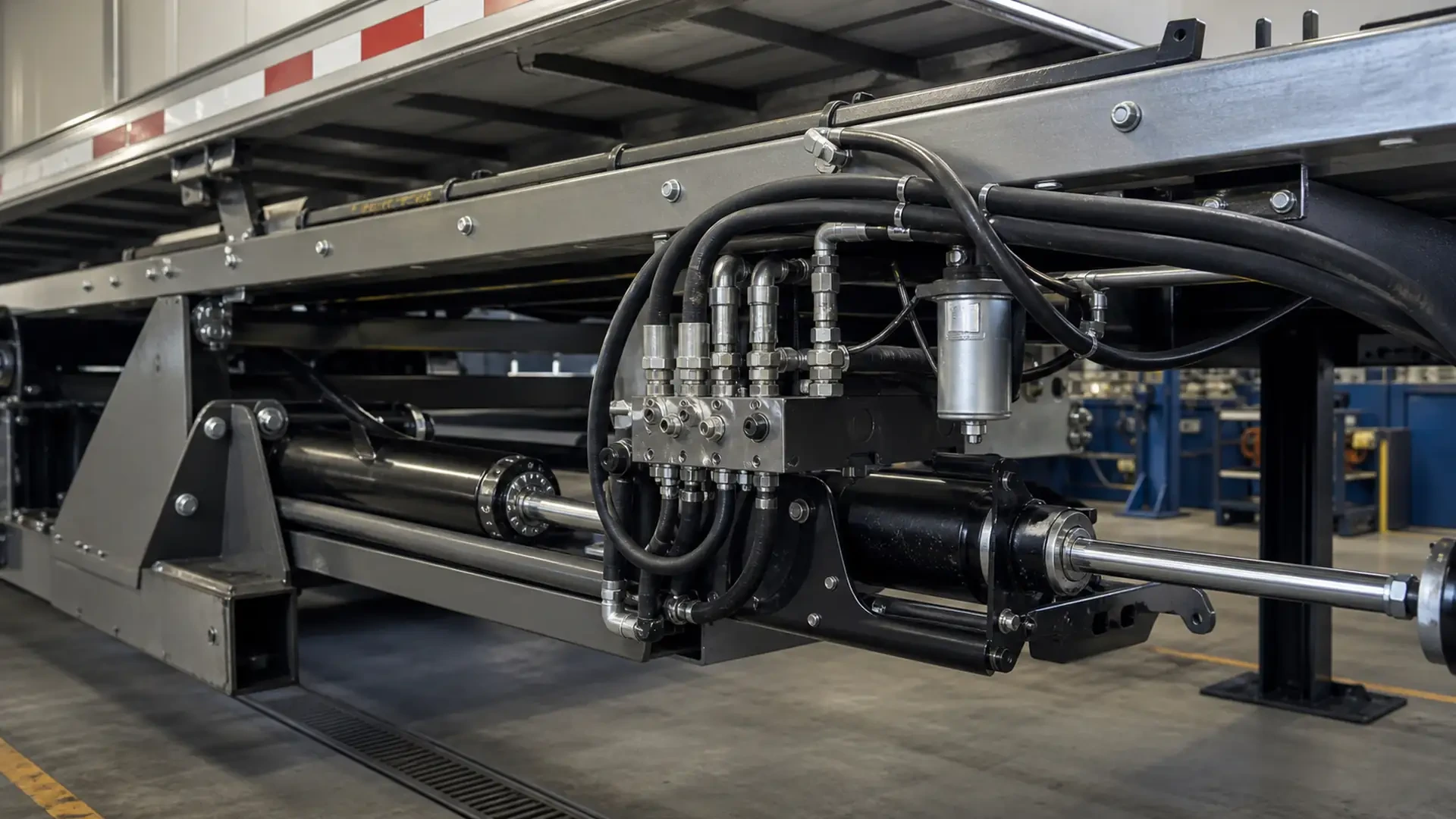
Hydraulic repairs for Walking Floor trailers: service guide
Hydraulic repairs for Walking Floor trailers begin with the symptom, not a guessed component. A visible leak, slow response, incomplete sequence or uneven floor movement can point the inspection toward the hydraulic system, but the complete condition may also involve mechanical resistance, wear, alignment or material buildup.
A useful repair process therefore considers how the floor behaves, where the symptom appears and what changed before the problem began. The final scope depends on an in-person evaluation of the unit.
Brothers Truck Trailer Repair and Welding Corp. provides Walking Floor diagnosis, repair and maintenance from its workshop at 1620 S 51st St, Tampa, FL 33619. This guide explains which symptoms to report, what the shop may inspect and how to prepare for service.
How hydraulics and floor movement work together
A Walking Floor uses hydraulic power to move groups of floor slats through a controlled sequence. That movement also depends on mechanical and structural components supporting the slats and transferring motion through the system.
This connection matters during diagnosis. A floor that slows or moves unevenly may have a hydraulic problem, but it may also encounter resistance from worn bearings or guides, changed alignment, damaged slats, structural contact or accumulated material. Likewise, a visible hydraulic leak may be one part of a broader complaint rather than the only condition present.
The repair conversation should begin with observed behavior and then narrow the inspection based on evidence.
Signs that may lead to a hydraulic inspection
You do not need to assign a cause before contacting the shop. Report changes such as:
Visible fluid around a hose, fitting, line, valve or cylinder area.
A floor that responds more slowly than its usual operating pattern.
A sequence that hesitates, stops or does not complete.
One section that appears to move differently from the others.
New vibration, pulsing, impact or unusual sound during operation.
A symptom that becomes more noticeable when the unit is loaded.
A recurring problem following recent hydraulic or floor work.
A change that appeared after impact, contamination or prolonged material buildup.
These are service clues, not proof that a particular pump, valve, cylinder or hose has failed. Avoid repeatedly cycling a system that leaks, binds or moves unexpectedly only to reproduce the symptom.
What may be checked during Walking Floor hydraulic repair?
The exact inspection varies by system and complaint. Depending on the unit, the shop may evaluate the following areas.
Hoses, lines and fittings
Visible wetness, abrasion, cracking, altered routing or contact with nearby components can provide useful evidence. Fluid may travel away from the original source, so both the wet area and the surrounding path should be examined before a part is selected.
Valves, cylinders and related hydraulic components
The technician may consider whether component response matches the symptom and whether there is visible leakage, damage or another condition affecting operation. Internal condition cannot be confirmed from an exterior photo alone.
Fluid and contamination evidence
Fluid condition, visible residue and service history may help define the inspection. The correct fluid specification and maintenance procedure depend on the applicable system information. Do not mix or add an unspecified product based on a general online recommendation.
System response under controlled service conditions
When appropriate for the unit, the shop may observe how the system responds during a controlled evaluation. The purpose is to connect the reported symptom with what the system and floor actually do, not to promise a diagnosis from one measurement.
Mechanical floor resistance
Hydraulic power still has to move the floor assembly. Slats, bearings, guides, support areas, alignment, contact marks and material accumulation may be relevant when the floor is slow, uneven or incomplete.
If a mechanical restriction is present, addressing only a hydraulic symptom may leave the broader operating complaint unresolved.
Leak, slow response or uneven movement: why the distinction matters
Different complaints give the shop different starting points.
Visible leak
Report where the fluid first appears, whether it is a drip or active discharge, when it appears and whether it returns after cleaning. Do not touch a suspected pressurized leak or tighten a connection while the system may be under pressure.
Slow or incomplete response
Describe what “slow” means compared with the unit’s normal behavior. Note whether the change affects the complete floor or one part of the sequence and whether it happens loaded, empty or under both conditions.
Uneven movement
Record which section moves differently, whether the behavior repeats and whether there are new rub marks, gaps, debris, sounds or leaks. Uneven movement deserves both hydraulic and mechanical context.
Intermittent symptom
State how often it happens and what condition is repeatable. Recent temperature, cargo type, cleaning, maintenance or impact history may be useful context, but they should not be presented as confirmed causes without inspection.
What repair work may follow the inspection?
The findings determine the recommendation. Depending on the verified condition, hydraulic service may involve repair or replacement of an identified hose, fitting, line, valve, cylinder or another applicable component. Related work may include addressing contamination, routing, contact or a mechanical condition affecting floor movement.
Some units may also require slat, bearing, guide, alignment, structural or welding work. Brothers Truck Trailer provides Walking Floor repair and maintenance, hydraulic diagnosis and repair, replacement of worn or damaged floor slats, aluminum welding, fabrication and parts assistance within its confirmed services.
No single repair list applies to every trailer. Parts availability, compatibility, service timing and cost should be confirmed after the unit and the relevant system information are reviewed.
How to prepare a Walking Floor hydraulic service request
Prepare the following details when they can be gathered safely:
Trailer information: make, model, year and visible system identification.
Exact symptom: what the floor or hydraulic system does differently now.
Timing: when the symptom began and whether it is constant or intermittent.
Operating condition: loaded, empty, during unloading or after extended operation.
Location: the side, section and nearby components where the issue appears.
Images: a wide installed view, closer details and visible labels.
Recent history: hydraulic work, floor repair, welding, impact or maintenance.
Previous recurrence: whether the same symptom has happened before.
Do not disassemble components for photos or enter the path of moving floor sections. If fluid is spraying, the system binds or a component moves unexpectedly, stop the observation and request professional guidance.
What to expect from the first shop conversation
The shop may ask follow-up questions about the unit, symptom, load condition and recent service history. It may also request additional photos or identification details before the visit.
That conversation prepares the evaluation; it does not replace it. A final recommendation requires enough evidence to distinguish the visible symptom from the condition causing it.
Request Walking Floor hydraulic repair in Tampa
If your Walking Floor has developed a leak, slow response, incomplete sequence or uneven movement, document the symptom safely and contact Brothers Truck Trailer Repair and Welding Corp. at +1 (813) 750-6380.
The workshop is located at 1620 S 51st St, Tampa, FL 33619. Bring the unit information, photos and recent service history so the team can begin with a clear description of the problem.
Call Brothers Truck Trailer at +1 (813) 750-6380 with the unit information, observed symptom and recent service history to request a Walking Floor hydraulic evaluation in Tampa.

Technical reference for 3500 lbs trailer axles covering GAWR, tire ratings, brake rules, fitment specs, and inspection protocols for commercial fleets.

Learn how etracks in trailer systems work, installation best practices, and repair procedures to keep your cargo secure and compliant on the road.

Master trailer wheel bearings maintenance with expert steps for inspection, repacking, and replacement. Reduce downtime and prevent costly failures today.