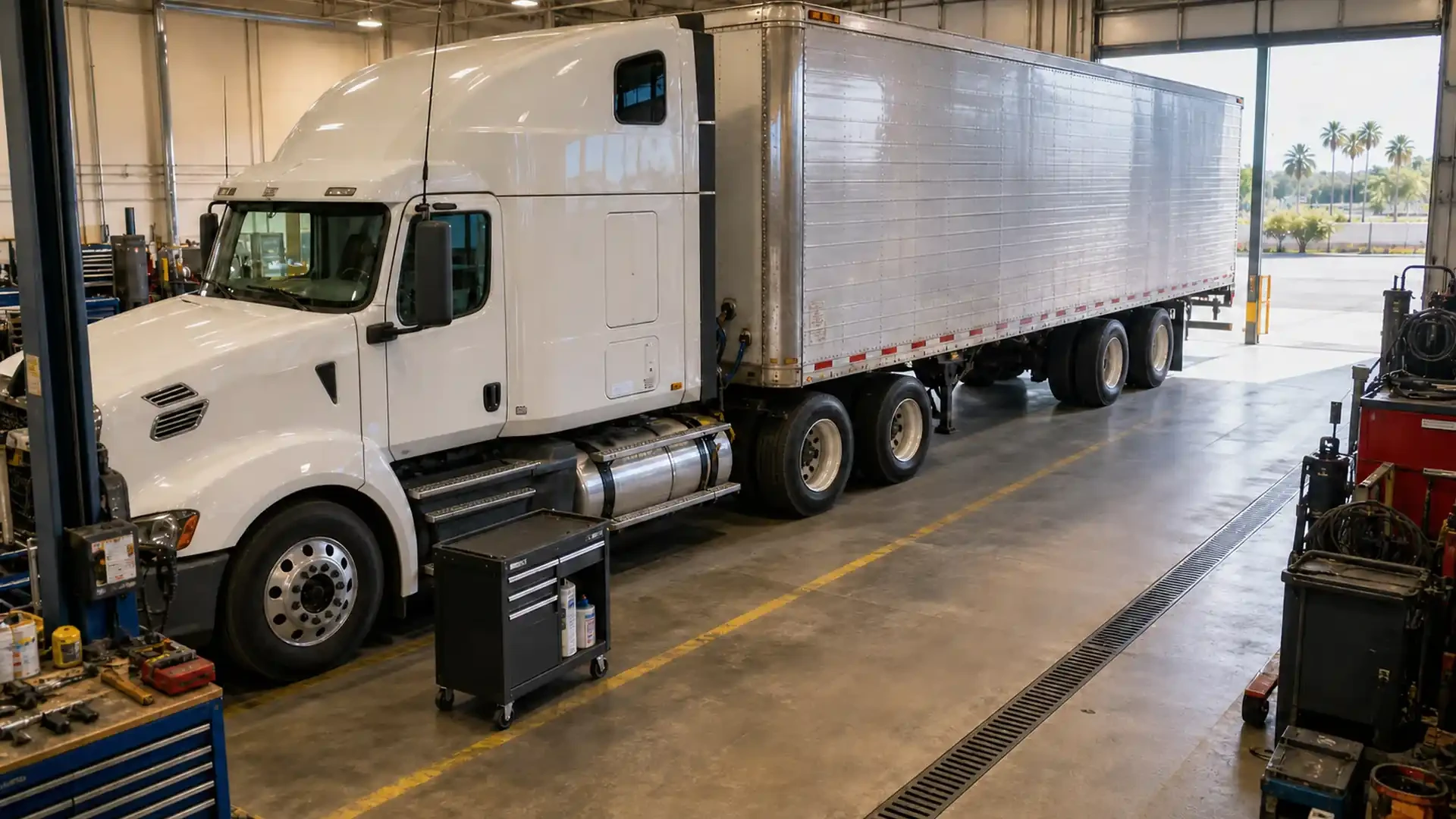
What to expect from a truck and trailer maintenance shop in Tampa
A useful maintenance visit starts before the truck or trailer enters the shop. The unit’s recent symptoms, service history, operating conditions and upcoming workload can help define what needs attention and which concerns should be inspected first.
Brothers Truck Trailer Repair and Welding Corp. provides truck and trailer maintenance at its workshop at 1620 S 51st St, Tampa, FL 33619. Services include preventive truck maintenance, general trailer repair, Walking Floor diagnosis and repair, aluminum welding, custom fabrication and parts assistance.
This guide explains how to prepare for a maintenance visit, how planned service differs from a symptom-driven repair and what fleet managers or owner-operators should record between visits.
What is the difference between maintenance and repair?
Maintenance is planned work intended to inspect condition, replace routine items when appropriate and identify changes before they interrupt operation. Repair begins with a known symptom, damaged component or operating problem that needs evaluation.
The two often overlap. A maintenance inspection may reveal a worn or damaged part, while a repair visit may identify related maintenance that should be considered. The final scope depends on the condition of the unit and the service requested.
Planned maintenance may include
Oil and fluid service based on the truck and service requirements.
Review of brakes and suspension components.
Engine diagnosis when a reported symptom requires it.
Preventive inspections and road-readiness checks within the shop’s documented capabilities.
Inspection of trailer wear, visible damage and relevant moving components.
Walking Floor maintenance based on system behavior and condition.
A repair visit may begin with
A new leak, noise, vibration or loss of normal operation.
Visible structural damage, cracking or deformation.
A Walking Floor that moves slowly, unevenly or incompletely.
A worn, loose or damaged component.
A symptom that returned after previous work.
Neither category should be used to promise a specific repair without an inspection. Maintenance records and a clear symptom description help the shop separate routine needs from a condition that requires diagnosis.
What should a maintenance shop know about your unit?
Bring information that explains how the truck or trailer is used, not only its make and model.
Useful details include:
Unit identification: make, model, year, trailer type and available system information.
Operating pattern: local routes, repeated loading cycles, long-distance use or other relevant duty conditions.
Cargo or application: especially when material can accumulate around moving floor components.
Recent changes: noise, vibration, leak, uneven wear, reduced performance or altered movement.
Service history: recent maintenance, welding, component replacement and recurring concerns.
Upcoming workload: scheduled routes or periods when the unit will be heavily used.
Photos or records: images of visible concerns and a written log of when symptoms occur.
Do not disassemble a component or approach moving equipment to collect this information. Record only what can be observed safely.
Why maintenance records matter
A simple record can reveal whether a condition is new, gradual or recurring. It can also help a fleet compare units without relying on memory.
For each truck or trailer, record:
Date and mileage or operating interval when available.
Maintenance or repair performed.
Parts or components discussed with the shop.
New sounds, leaks, wear marks or operating changes.
Conditions under which a symptom appears.
Photos taken from the same safe viewpoint over time.
Follow-up recommended after the service visit.
The record does not replace an inspection. It gives the technician a clearer history and helps the owner or fleet manager follow changes between visits.
Special considerations for Walking Floor maintenance
A Walking Floor combines hydraulic, mechanical and structural movement. A change in one area can affect how the complete floor behaves.
Before a maintenance or repair visit, note:
Whether the floor completes its normal sequence.
Whether one section hesitates or moves later than the others.
Whether the symptom occurs loaded, empty or in both conditions.
Any visible hydraulic fluid around hoses, fittings, valves or cylinders.
New scraping, rubbing, vibration or impact noise.
Wear or changed gaps around slats, bearings, guides or supporting areas.
Cargo or material buildup that may be related to the concern.
Recent hydraulic work, welding or part replacement.
Do not assume that uneven movement confirms one failed valve, cylinder or bearing. The system configuration and complete symptom should be evaluated before a part is selected.
When should planned maintenance become a prompt service request?
Gradual, stable wear may be documented for a scheduled inspection. Contact the shop promptly when the unit develops:
An active hydraulic leak.
Binding, jerking or incomplete movement.
A new crack, deformation or displaced component.
Severe or rapidly increasing vibration.
A brake, suspension or operating concern that may affect safe use.
A condition that is becoming worse during normal operation.
If there is uncertainty about whether the unit should continue operating, stop the observation from a safe position and ask for professional guidance. Online content cannot determine roadworthiness or replace an in-person evaluation.
How to evaluate a maintenance shop
When choosing a truck and trailer maintenance shop in Tampa, ask questions that clarify fit and process:
Does the shop work on the truck, trailer or specialized system involved?
What unit and symptom information should you provide before arrival?
Does the shop offer the maintenance, welding or Walking Floor service you need?
How will the scope be defined after inspection?
What parts information or measurements may be required?
Where is the physical workshop, and how should you request service?
Avoid relying on unsupported promises about same-day work, guaranteed results or permanent parts availability. Timing and scope depend on the unit, inspection, workload and parts requirements.
Truck and trailer maintenance in Tampa
Brothers Truck Trailer provides maintenance and repair services from its Tampa workshop, with a focus on Walking Floor systems and aluminum welding. The shop also handles general truck and trailer maintenance, fabrication and parts inquiries within its confirmed services.
If your unit is due for planned maintenance or has developed a new symptom, prepare the service history and contact the shop to discuss the appropriate next step.
Call Brothers Truck Trailer to discuss your maintenance needs, recent symptoms and service history before bringing the unit to the Tampa workshop.
Expert commercial trailer repair in Tampa for Walking Floor, aluminum welding, and fleet maintenance. Minimize downtime with Brothers Truck Trailer Repair.
Preventive maintenance for commercial trailers: inspection checklists, Walking Floor care, aluminum repairs, and fleet service in Tampa Bay.
Master walking floor trailer hydraulic troubleshooting with expert diagnostics, safety protocols, and repair strategies to minimize fleet downtime.