Truck & Trailer Welding & Fabrication Guide
A trailer can look serviceable in the yard and still be one hard turn away from a serious failure. A cracked crossmember, a loose floor support, or a poorly repaired aluminum panel may hold while the unit is empty, then separate under loaded road conditions. When that happens, the difference between a controlled repair stop and a roadside shutdown usually comes down to the quality of the original welding and fabrication work.
Fleet managers and owner-operators don't have the luxury of treating structural repairs as cosmetic work. Every repair has to account for load, vibration, corrosion, repeated flexing, and the imperfect fit-up found on equipment that has already spent years in service. The right process keeps a trailer road-ready. The wrong repair can leave a hidden weakness that returns at the worst possible time.
Table of Contents
- Why Truck and Trailer Welding Matters
- Core Welding and Fabrication Processes
- Aluminum vs Steel in Trailer Fabrication
- Shop Capabilities and Fit-Up Quality
- Common Custom Fabrications and Repairs
- Maintenance and Downtime Considerations
- Choosing the Right Fabrication Partner
Why Truck and Trailer Welding Matters
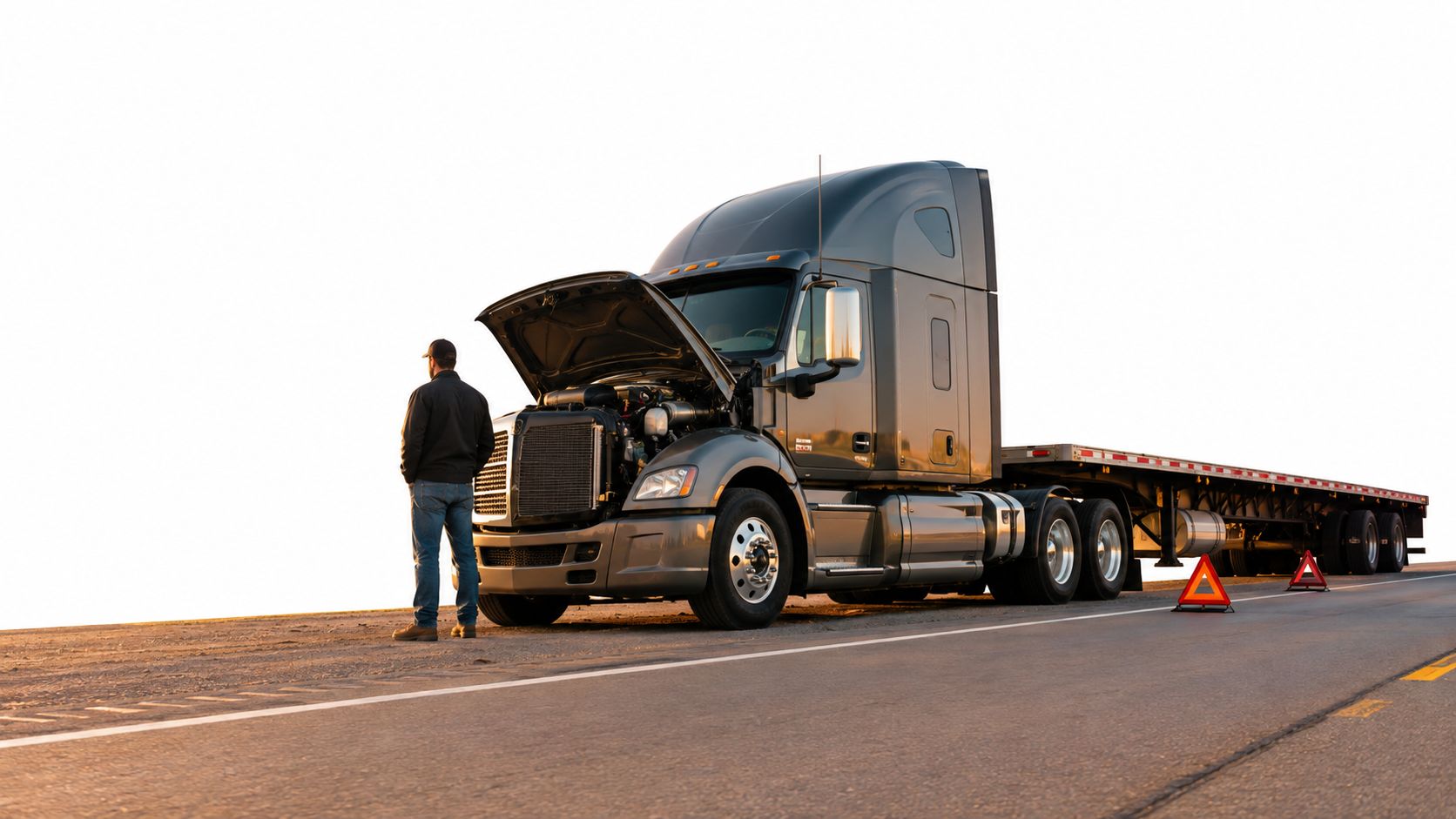
The call often comes after the first failure, not before it. A driver reports that a trailer is sitting on the shoulder with a damaged support, a failed body section, or a floor system that won't unload. The fleet loses the delivery window, the driver loses productive hours, and a repair that might have been scheduled during planned downtime becomes an urgent decision made under pressure.
A sound welding repair does more than reconnect two pieces of metal. It restores the load path, protects surrounding material, and returns the component to a condition that can tolerate the same operating environment that caused the damage. That requires inspection before welding, correct material selection, controlled heat, and a plan for how the repaired area will carry stress after the trailer returns to work.
More than a repair bill
Welding has become a core industrial skill because trucks, trailers, containers, machinery, and infrastructure all depend on joined metal components. One market report valued the global welding market at USD 26.1 billion in 2024 and projects it will reach USD 38.27 billion by 2032, with a projected 4.9% CAGR, as reported in global welding market data. The same source reports that more than 50 million welders work globally, with major concentrations in manufacturing and construction.
That scale matters to transportation operators because it shows how much practical knowledge sits behind a seemingly simple repair. Welding isn't just a torch and a bead. It combines metallurgy, joint preparation, fabrication layout, inspection, and an understanding of how a working vehicle fails.
The trade became strategically important during industrial production and wartime manufacturing. A historical U.S. Bureau of Labor Statistics report recorded that welding had expanded to 125,000 welders and flame-cutters by the wartime period. It also documented arc-welding electrode production rising from 15,827,643 pounds in 1931 to 198,995,000 pounds in 1940, evidence of how quickly welding moved from specialized work into mass production.
Practical rule: A trailer repair isn't finished when the bead looks smooth. It's finished when the underlying failure has been identified, the joint is properly prepared, and the repaired structure can return to its working load.
For fleet maintenance, that means choosing a shop that understands the difference between a patch and a structural repair. A patch may hide visible damage. A proper fabrication repair restores function and anticipates the forces that will act on the area during loading, braking, turning, and repeated road vibration.
Core Welding and Fabrication Processes
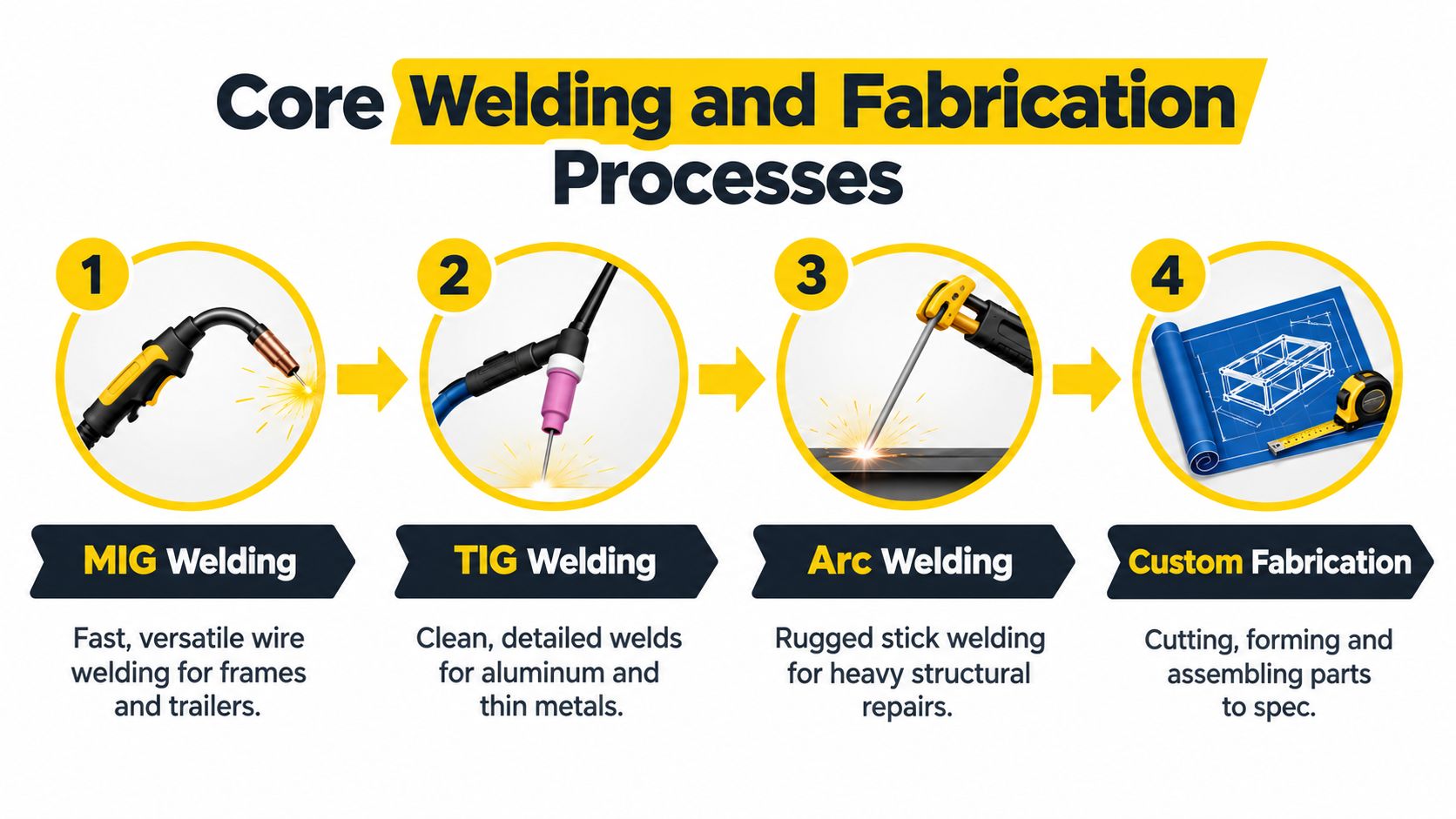
The process should follow the material, joint, access, and service demand. A professional shop doesn't choose MIG, TIG, or stick welding because one process is universally better. It chooses the process that gives the welder control without adding unnecessary heat or compromising access.
MIG welding for productive structural work
MIG welding feeds a continuous wire electrode through a gun while shielding the arc from atmospheric contamination. Shops use it extensively for truck frames, trailer components, brackets, supports, and general structural fabrication because it offers a practical balance of speed, deposition, and versatility.
The process still demands discipline. The technician must select compatible wire, shielding gas, voltage, wire speed, and travel speed. Poor ground placement, contamination, excessive travel speed, or a joint with an uncontrolled gap can produce a weld that looks acceptable but lacks consistent fusion.
MIG is often the sensible choice when a repair involves sound access, suitable steel or aluminum wire, and enough material thickness to tolerate the process. It isn't a substitute for cleaning, fit-up, or inspection.
TIG welding for controlled aluminum repairs
TIG welding uses a non-consumable tungsten electrode and gives the operator precise control over the arc and filler addition. That control makes it useful for aluminum repairs, thin sections, visible body work, and joints where appearance and heat management matter.
Aluminum conducts heat quickly and develops an oxide layer that must be removed correctly. The operator has to keep the joint clean, maintain stable torch control, and avoid lingering in one area. TIG welding is slower than many MIG applications, but speed isn't the only measure of a good repair. A controlled weld can prevent the distortion and excessive buildup that create new fitment problems.
Arc welding for difficult access
Arc welding, commonly called stick welding, uses a flux-covered electrode. It remains valuable for heavy structural repairs, outdoor work, and situations where wind or limited access makes shielding gas impractical.
The process is less forgiving in appearance and requires careful control of electrode selection, arc length, travel angle, and slag removal. A technician must clean between passes and inspect the result instead of assuming that a heavy-looking bead equals a strong joint. Stick welding can be an effective field process, but it still depends on clean preparation and a sound repair design.
Fabrication before welding
Custom fabrication may involve measuring, cutting, drilling, forming, gusseting, and assembling a replacement component before the weld ever starts. The technician may build a new support, reinforce a frame area, restore a damaged body panel, or modify a component to fit an operating requirement.
A useful shop conversation should cover the proposed process, base material, filler material, weld access, inspection method, and expected finish. If the answer is only “we'll weld it up,” the repair plan isn't specific enough for a load-bearing truck or trailer component.
This short video provides a visual introduction to the processes commonly used in welding and fabrication work.
Aluminum vs Steel in Trailer Fabrication
Material choice changes the repair strategy before the welder strikes an arc. Aluminum and steel behave differently under heat, resist corrosion differently, and impose different demands on preparation and inspection. Treating them as interchangeable is a reliable way to create rework.
Aluminum favors weight control and careful technique
Aluminum is attractive in trailer construction because it can reduce overall vehicle weight and resist ordinary atmospheric corrosion better than unprotected steel. It also works well for body panels, floors, side structures, and components where lower mass supports payload efficiency.
The trade-off appears during repair. Aluminum transfers heat rapidly, develops a tenacious oxide layer, and can distort before the operator recognizes how much the joint has moved. A repair that uses excessive heat may create a larger problem than the original crack, especially around thin material or an already fatigued section.
Practical aluminum repair guidance recommends stringer beads instead of wide weaving, step or backstep welding instead of a long continuous weld, careful cleaning, and the minimum weld size and pass count that still meet the strength requirement. These recommendations are covered in aluminum TIG repair guidance, which also explains why excessive heat can increase distortion, residual stress, and crack risk.
Steel tolerates more abuse, but corrosion remains a threat
Steel is generally easier to source, cut, form, and weld in heavy structural applications. It provides strong support for frames, brackets, crossmembers, landing gear areas, and reinforcement work. Its repair behavior is familiar to most heavy-duty welding shops, and a steel replacement section can often be fabricated with straightforward equipment.
Steel's weakness is exposure. Once protective coatings fail, rust can reduce section thickness and move into seams, overlaps, and crevices. Welding over severely deteriorated steel doesn't restore the original strength. The technician may need to remove compromised material and replace it with sound metal before designing the joint.
| Repair consideration | Aluminum | Steel |
|---|---|---|
| Heat control | Requires close control because heat spreads quickly and distortion can develop rapidly | Still needs controlled heat, especially in thin sections and restrained joints |
| Surface preparation | Oxide removal and cleanliness are critical | Rust, paint, oil, scale, and coating contamination must be removed |
| Corrosion concern | Better resistance in many exposed applications, but galvanic and surface issues still matter | Coatings and drainage are essential because exposed steel corrodes |
| Repair difficulty | Often demands specialized aluminum technique and compatible filler | Broadly familiar, but damaged material must be evaluated before welding |
| Design reference | Fatigue work commonly uses standardized S-N curve methods under execution rules such as EN 1090-3 | Design depends on grade, joint, loading, execution, and corrosion protection |
The right decision isn't “aluminum is lighter” or “steel is stronger.” Inspect the existing unit, identify the failed load path, and preserve compatible material where practical. Replacing aluminum with steel can add weight and create corrosion or attachment concerns. Replacing a damaged steel structural member with thin aluminum may fail to provide the required stiffness.
Shop Capabilities and Fit-Up Quality
A capable shop can explain how it will make the parts meet before it explains how it will weld them. Fit-up describes the alignment, joint geometry, gap, edge condition, and restraint present before welding begins. In fleet repairs, those conditions are rarely ideal because the original component may be bent, worn, corroded, or distorted from an impact.
Why the gap controls the repair
A gap isn't a minor visual defect. It changes how much filler metal the joint needs, how quickly heat enters the surrounding material, and how likely the operator is to experience burn-through or incomplete fusion. A large opening may force slower, multi-pass work, which adds heat and increases the chance of distortion.
The acceptable gap depends on joint design, material thickness, welding process, and whether filler metal is allowed. Guidance on weld tolerance and fit-up highlights why a single universal allowable gap oversimplifies real repairs. A shop that takes measurements before cutting replacement material is protecting the repair from problems that won't be solved by adding a larger bead.
What to look for on the floor
Good fabrication work starts with visible preparation. The technician should remove contamination, expose sound base metal, identify cracks beyond the obvious opening, and decide whether clamping or temporary bracing is needed. On a trailer, the repair may also require checking nearby supports because a failed member can transfer unusual load into adjacent components.
Look for these capabilities when comparing providers:
- Measurement and layout: The shop should establish dimensions, reference points, and alignment before fabricating a replacement.
- Material identification: The technician should distinguish aluminum, mild steel, high-strength sections, coated material, and dissimilar attachments before selecting filler and procedure.
- Controlled restraint: Clamps and fixtures can hold a part in position, but excessive restraint can trap stress as the weld cools.
- Repair sequencing: Shorter, balanced welds and planned passes can limit movement compared with welding one side continuously.
- Inspection discipline: The finished work should be checked for visible cracking, undercut, porosity, missed fusion, distortion, and interference with adjacent parts.
The strongest repair often begins with better preparation, not a bigger weld.
Residual stress and distortion are inherent in welding because uneven heating and cooling create permanent deformation and stress after the external load is removed. Technical guidance on residual stress and distortion connects final fit-up and dimensional accuracy to weld sequence, joint design, clamping, and heat input.
For fleet operators comparing service options, the truck and trailer parts catalog can also help identify the component or replacement category that needs attention before a repair is scheduled. The important point is not the catalog alone. It is whether the shop can match the replacement part to the actual unit and fabricate what standard inventory cannot provide.
Common Custom Fabrications and Repairs
A repair shop earns its value when the damaged component isn't a standard bolt-on part. Fleet equipment develops problems specific to its work. Waste haulers deal with abrasive loads and repeated unloading cycles. Construction fleets encounter impact damage, mud, and heavy material. Regional trailers may accumulate fatigue around supports, hinges, floors, and body attachments.
Walking Floor systems
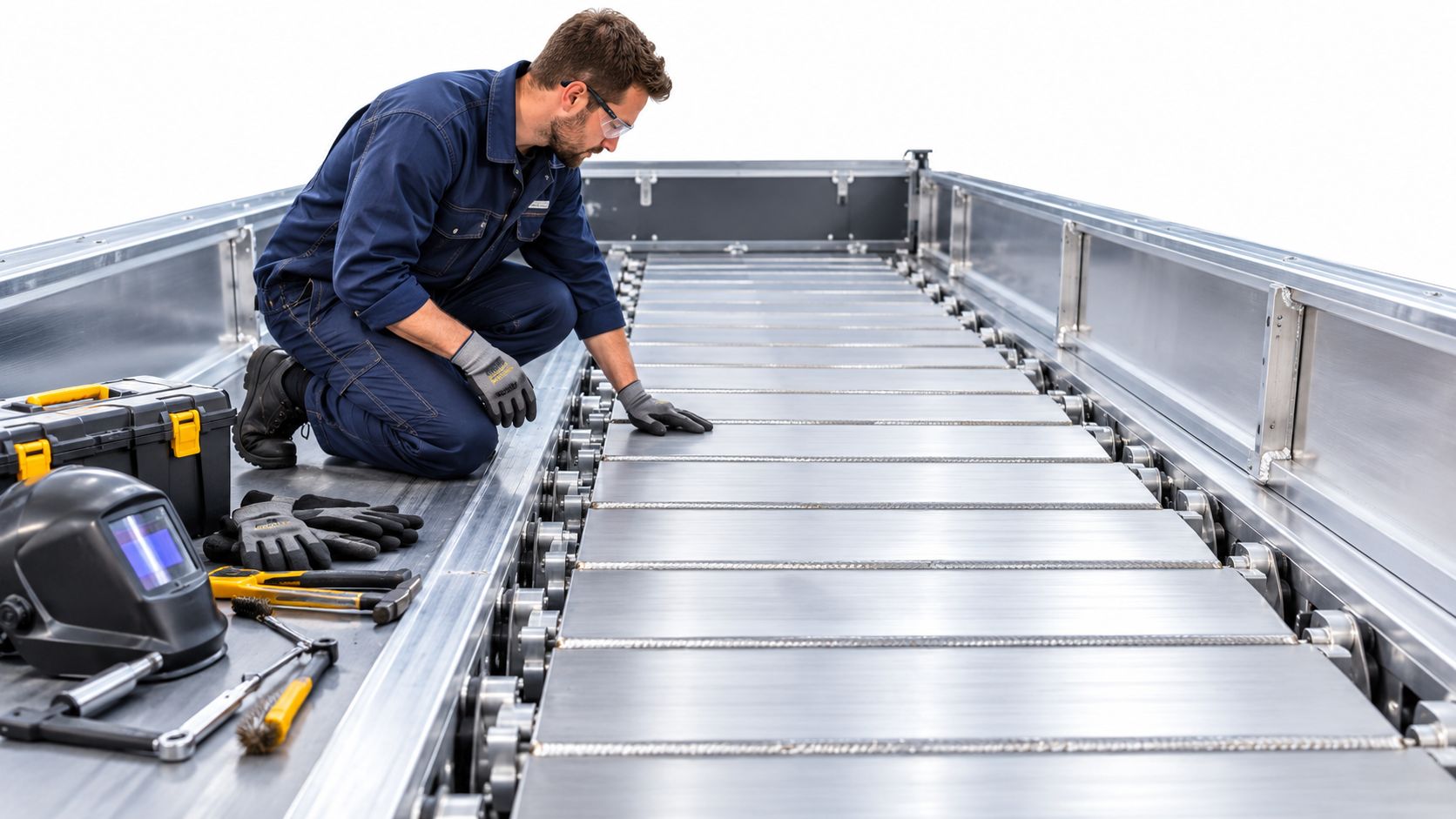
Walking Floor trailers combine structural components with hydraulic movement. The floor slats, supports, guides, seals, cylinders, and hydraulic connections all have to work together. A bent guide or worn slat can increase resistance and make the system unload unevenly. A hydraulic leak may appear to be a hose problem while the underlying issue involves a damaged fitting, cylinder area, or misalignment.
A proper repair starts with system diagnosis rather than immediately replacing the visible part. The technician should identify whether the problem is hydraulic, mechanical, structural, or a combination. Slat replacement, guide repair, support fabrication, and reinforcement may require precise measurement because a small alignment error can cause recurring wear.
Structural and body repairs
Common fabrication work includes reinforcing a damaged frame area, replacing a corroded support, rebuilding a bracket, restoring a side panel, and repairing a floor section. Each job has a different load path. A body panel may need controlled cosmetic alignment and corrosion protection, while a crossmember repair must restore structural transfer without creating a rigid stress concentration next to flexible material.
The repair sequence matters:
- Expose the damage. Remove loose coating, cracked material, deformed sections, and corrosion that prevents a sound joint.
- Find the original cause. Check impact marks, overload-related bending, missing support, loose fasteners, and adjacent cracks.
- Make the replacement fit. Trim and form new material so the joint doesn't depend on excessive filler metal.
- Control the weld. Use an appropriate process, sequence, and heat level for the material.
- Protect the finished area. Restore coating, drainage, edge protection, or isolation where the design requires it.
A heavy bead can conceal a poor repair. If the base metal is thin, contaminated, or misaligned, adding more weld doesn't restore what has been lost. The shop must decide whether to weld, sleeve, reinforce, replace, or redesign the damaged area based on its actual condition.
Custom fabrication is especially useful when the fleet has a recurring operational problem. A purpose-built guard, support, access panel, or reinforcement can improve service access and prevent the same damage from returning, provided it doesn't interfere with movement, inspection, loading, or road clearance.
Maintenance and Downtime Considerations
The cheapest welding repair is often the one scheduled before a visible crack becomes a roadside failure. Maintenance staff don't need to wait for a major inspection to notice warning signs. They can look for fresh rust lines, cracked paint around welds, distorted brackets, loose panels, unusual floor movement, hydraulic seepage, and changes in how a trailer loads or unloads.
Build inspections into normal routes
Walk-around checks should focus on areas that see impact, vibration, flexing, and repeated loading. Inspect weld toes, corners, gussets, crossmember connections, landing gear supports, door hardware, floor attachments, and repaired areas. On aluminum equipment, look for cracks and fretting around fasteners or welded attachments. On steel, look beneath coatings and around water traps where corrosion can reduce the remaining section.
Record the location and condition of each defect. A photograph with a unit number and date gives the repair shop useful context and helps the fleet identify recurring failure patterns.
Prevent emergency scheduling
Use planned service windows for repairs that don't yet threaten safe operation, but don't postpone a structural defect just to protect utilization. A trailer that remains in service while a crack grows can turn a controlled fabrication job into a larger repair involving surrounding members.
A practical maintenance routine includes:
- Routine inspections: Check repaired areas and high-load connections for cracks, movement, wear, and corrosion.
- Clean surfaces: Remove mud, salt, residue, and leaked fluids so defects don't stay hidden.
- Timely repairs: Isolate equipment with a safety-critical defect and arrange an assessment before it returns to loaded service.
- Scheduled fabrication: Combine related work during planned downtime when the unit can be safely stripped, measured, and aligned.
- Quality records: Document the failed component, material, repair method, parts used, and follow-up inspection.
For operators who need service information in Spanish, the Spanish-language truck repair resource provides another way to communicate maintenance needs and repair details. Clear handoffs matter when drivers, mechanics, and fleet managers share responsibility for roadworthiness.
Choosing the Right Fabrication Partner
The right shop asks questions before offering a quick answer. It wants to know what failed, what the trailer carries, whether the damage followed an impact, how long the problem has existed, and whether the unit is aluminum or steel. It may request photographs, dimensions, serial information, or a physical inspection before promising a repair schedule.
That caution is useful. A shop that quotes only by visible crack length may miss the distorted support behind it. A shop that understands fleet work will consider access, parts availability, fit-up, corrosion, future inspection, and how long the unit can remain out of service.
Questions worth asking
Ask the provider to explain:
- What caused the failure: Is the repair addressing impact, fatigue, corrosion, overload, misalignment, or a missing support?
- How the joint will be prepared: Will the technician remove damaged metal, expose sound material, and establish a controlled gap?
- Which process and material will be used: Does the proposed filler match the base metal and intended service?
- How alignment will be checked: Will the shop use reference measurements, temporary fixtures, or a dry fit before welding?
- What happens after welding: Will the area be inspected, cleaned, coated, and checked for interference or movement?
- How parts affect downtime: Can the shop source the needed component or fabricate a compatible replacement?
A local provider also needs to understand the operating conditions around the fleet. Tampa Bay operators may deal with humidity, water exposure, road debris, and demanding turnaround requirements. Waste and recycling fleets need technicians familiar with Walking Floor systems. Owner-operators need direct communication because a missed repair window can affect the next load, not just a maintenance schedule.
Industry coverage points to a broader shift toward automation and digital quality control as shops respond to rising demand and skilled labor shortages. The Welding Journal coverage of automation and qualification developments discusses robotic and mechanized welding pathways under AWS D1.1:2025. Automation can improve repeatability for suitable production work, but it doesn't replace the judgment needed to diagnose a bent, corroded trailer that arrives with imperfect fit-up.
The best partner is the one that matches its process to your equipment. Use the truck and trailer repair service information to compare the available repair scope, parts support, and fabrication capabilities, then provide clear photos and symptoms before the appointment. A shop that can inspect, fabricate, weld, repair systems, and document the work gives the fleet a more complete path from failure to return-to-service decision.
Brothers Truck Trailer Repair and Welding Corp. offers truck and trailer repairs, Walking Floor diagnostics and component work, aluminum welding, custom fabrication, and access to in-stock parts for operators in the Tampa Bay area. If a trailer has a cracked support, damaged aluminum structure, unloading problem, or repair that needs careful fit-up, visit Brothers Truck Trailer Repair and Welding Corp. to discuss the unit and schedule the right service.
Authored using Outrank
Expert commercial trailer repair in Tampa for Walking Floor, aluminum welding, and fleet maintenance. Minimize downtime with Brothers Truck Trailer Repair.
Preventive maintenance for commercial trailers: inspection checklists, Walking Floor care, aluminum repairs, and fleet service in Tampa Bay.
Master walking floor trailer hydraulic troubleshooting with expert diagnostics, safety protocols, and repair strategies to minimize fleet downtime.