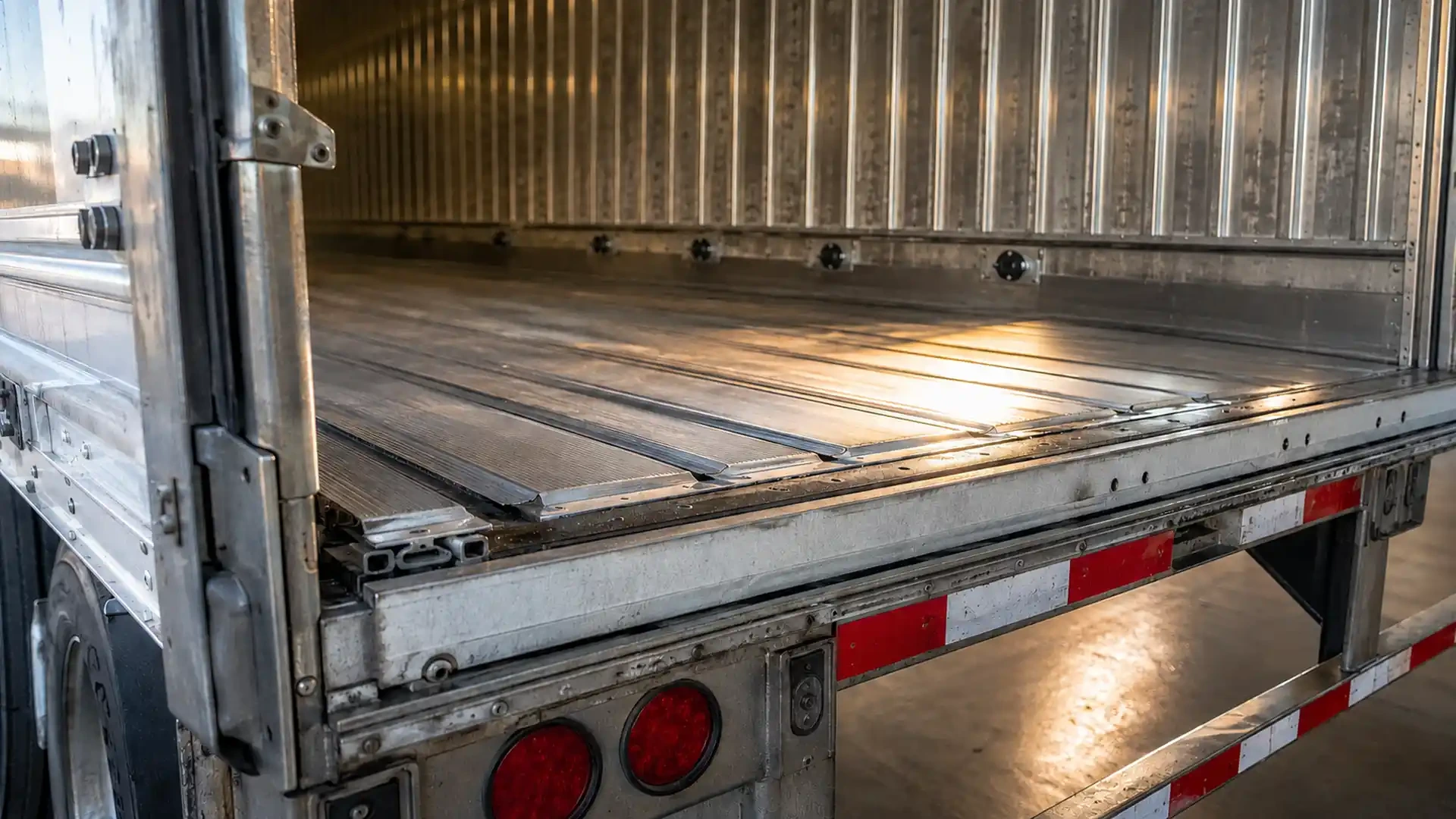
Walking Floor slows during unloading: what to record
A Walking Floor that begins an unloading cycle normally and then slows down is giving you an important symptom. The symptom does not identify the failed component by itself, but the sequence can help a repair shop understand where to begin an inspection.
Before requesting Walking Floor trailer repair, record when the change starts, what the trailer is doing at that moment, and whether the behavior repeats. A short, factual report is more useful than assigning the problem to a pump, valve, cylinder, slat, or another component before it has been inspected.
Define what “slow” means for this trailer
Begin with the unit's usual behavior. The useful comparison is not another trailer or an estimated ideal cycle. It is how this specific unit operated before the change appeared.
Note whether the floor:
Moves more slowly from the beginning of the cycle.
Starts at its usual pace and slows midway through unloading.
Changes only near the end of the load.
Hesitates between movements rather than maintaining a consistent sequence.
Stops and resumes without a clear pattern.
Behaves differently when loaded and when empty.
Use plain observations. For example, “movement becomes slower after approximately half the load has discharged” is clearer than “the hydraulic system is weak.” The first statement describes what happened. The second assumes a cause.
Record the unloading sequence
A symptom that changes during operation is easier to discuss when it has a timeline. If the unit can be observed without creating a hazard, divide the event into simple stages:
Before unloading begins.
At the start of floor movement.
During the middle of the unloading sequence.
Near the end of the load.
After the unit is stopped.
For each stage, note the floor movement, any unusual sound or vibration, and any visible change. You do not need precise performance measurements unless the shop specifically requests them. Consistent descriptions are usually enough to establish where the behavior changes.
A simple observation log
| Stage | Load status | Floor behavior | Sound or vibration | Visible condition |
| --- | --- | --- | --- | --- |
| Before start | Loaded or partially loaded | Not operating | None or describe | Leak, buildup, damage, or none observed |
| Start | Describe | Normal, slow, hesitant, or uneven | Describe | Describe |
| Mid-cycle | Describe | Same or changed | Describe | Describe |
| Near empty | Describe | Same or changed | Describe | Describe |
| After stop | Empty or partially loaded | Stopped | Describe | Describe |
Do not fill the table with guesses. “Not observed” or “unknown” is better than an assumption.
Include the operating conditions
The repair shop needs enough context to understand the event. Include:
The unit number, make, and model when available.
The type of material being unloaded.
Whether the trailer was full, partially loaded, or nearly empty when the slowdown appeared.
Whether the symptom occurred in one direction or during a particular part of the sequence.
Whether the surface and trailer position were typical for that unit.
Whether the behavior has happened once or repeatedly.
Any recent maintenance, adjustment, repair, or parts replacement.
These details do not prove a cause. They help separate a repeatable pattern from an isolated observation and give the technician a more useful starting point.
Photograph context, not just a close-up
If the trailer is parked and the area can be approached safely, create a short photo set:
One wide image showing the trailer and the general area involved.
One medium image showing the Walking Floor and nearby structure.
One closer image of any visible leak, buildup, rubbing, deformation, or unusual gap.
A second angle when it helps show alignment or the relationship between visible areas.
A short video may help document movement, but do not operate the system only to recreate a symptom if doing so could expose anyone to moving equipment, cargo, hydraulic pressure, or an unstable condition. Keep people clear of the discharge area and follow the unit's operating procedures.
Separate the symptom from the diagnosis
Slow response can appear alongside hydraulic, mechanical, load-related, or structural conditions. Similar symptoms can also have different causes. That is why the service request should distinguish between what you observed and what still needs inspection.
Useful wording includes:
“The floor starts at its usual speed and slows during the middle of unloading.”
“The slowdown appears only while the trailer is loaded.”
“Movement is slow and there is a new sound near the rear of the trailer.”
“No visible leak was observed from a safe position.”
Avoid presenting an unverified component failure as a conclusion. A repair shop may need to inspect the hydraulic system, movement sequence, floor components, structure, or more than one area before recommending service.
Note visible changes without reaching into the system
From a safe position, record conditions such as:
Visible hydraulic fluid or a new stain.
Material buildup around accessible floor areas.
A slat that appears different in height or alignment.
New rubbing or polished marks.
Loose, separated, bent, or damaged visible components.
A new sound or vibration that occurs at the same point in the sequence.
Do not place hands, tools, or cameras between moving slats or components. Do not go under an unsupported trailer. If the condition appears unstable or unsafe, stop the observation and contact a qualified repair provider.
Prepare a clear repair request
When contacting a shop, organize the information in this order:
Identify the trailer and its current location.
State that the Walking Floor slows during unloading.
Explain when in the sequence the change begins.
Describe whether it is repeatable and under which load conditions.
Mention any sound, vibration, leak, wear, or visible damage.
Share recent service history and the photo or video set.
Ask what information the shop needs before an inspection or repair visit.
This format keeps the request focused. It also helps the shop understand whether the conversation concerns hydraulic diagnostics, floor components, maintenance, welding, or another repair need.
When to stop collecting information
Do not continue operating the unit simply to produce a better report. Stop and seek professional guidance if you observe unexpected movement, a substantial leak, loose or separated components, structural damage, or another condition that could put people, cargo, or equipment at risk.
The goal is to document the symptom safely, not to confirm the failure through repeated operation.
Request Walking Floor repair in Tampa
If your Walking Floor slows down during unloading, contact Brothers Truck Trailer in Tampa with the unit details, symptom timeline, load conditions, and safe photos you have collected. The shop can use that information to discuss an appropriate next step for inspection, hydraulic diagnostics, slat service, maintenance, welding, or repair.
Brothers Truck Trailer is located at 1620 S 51st St, Tampa, FL 33619. Call +1 (813) 750-6380 or email [email protected] to discuss the unit and service request.
Does your Walking Floor slow during unloading? Send Brothers Truck Trailer the unit details, the point in the cycle when the change begins, and safe photos of the visible condition.

Expert commercial trailer repair in Tampa for Walking Floor, aluminum welding, and fleet maintenance. Minimize downtime with Brothers Truck Trailer Repair.

Preventive maintenance for commercial trailers: inspection checklists, Walking Floor care, aluminum repairs, and fleet service in Tampa Bay.

Master walking floor trailer hydraulic troubleshooting with expert diagnostics, safety protocols, and repair strategies to minimize fleet downtime.