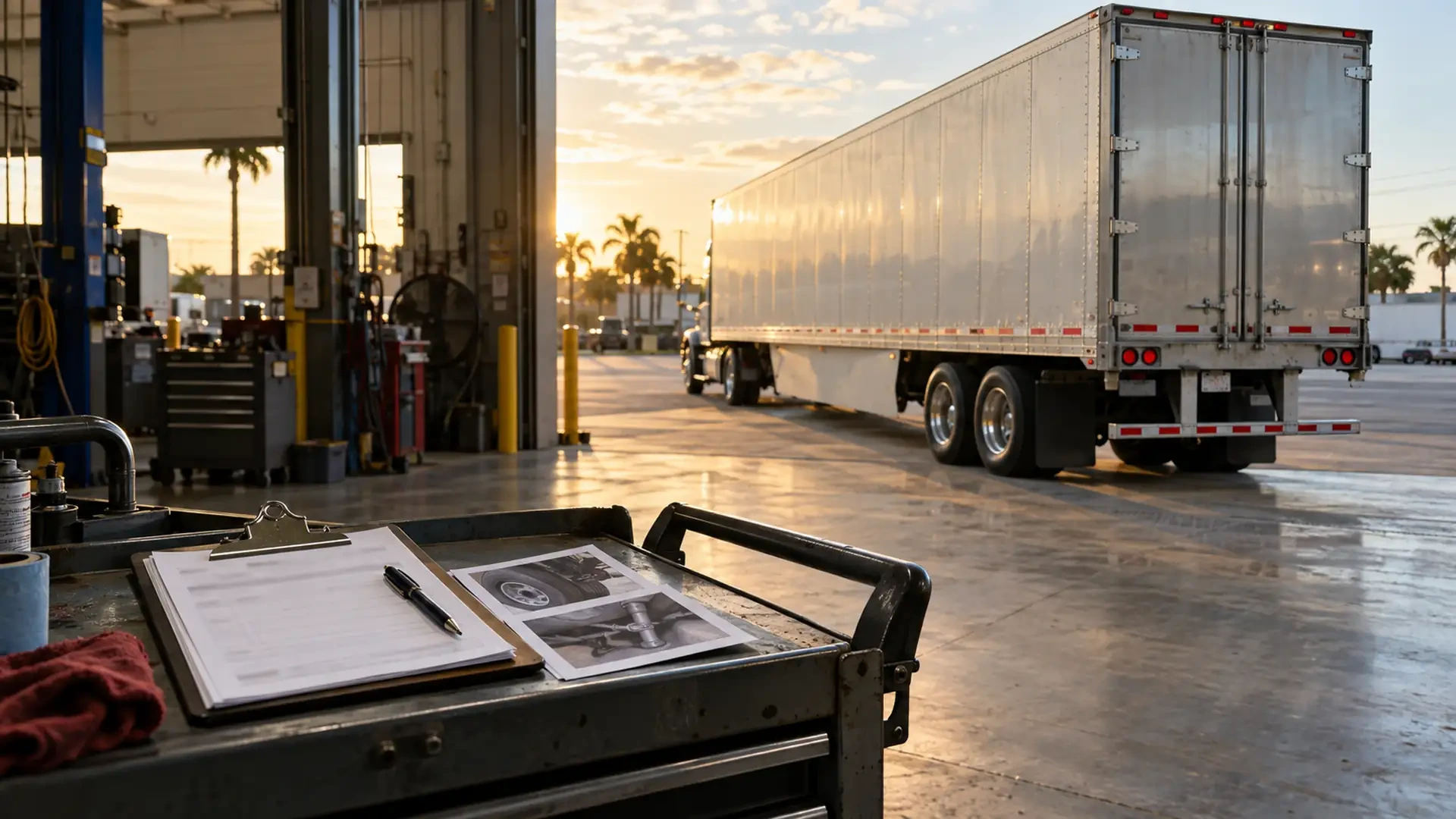
Fleet maintenance handoff: what to record between shifts
A driver may notice a change near the end of a shift, while the maintenance coordinator receives the report hours later. If the next operator gets only “keep an eye on it,” useful details can disappear before the truck or trailer reaches a shop.
A maintenance handoff preserves the observation, operating context and current status. It does not diagnose the unit or authorize continued operation. It gives the next responsible person a factual record for the applicable operating decision and service conversation.
What a maintenance handoff should accomplish
The handoff should allow another person to understand:
Which unit is involved.
What changed.
When and where it was observed.
What the unit was doing at the time.
Whether the observation repeated or changed.
What action was already taken under the fleet’s process.
What still needs follow-up.
The goal is continuity. The next person should not have to reconstruct the event from separate messages.
Identify the unit and the responsible contacts
Begin with information that prevents a report from being attached to the wrong vehicle or trailer:
Unit or fleet number.
Truck and trailer identification when both are involved.
Driver or observer.
Shift, date and approximate local time.
Dispatcher or maintenance contact notified.
Current location and operating status when appropriate.
Avoid placing sensitive personal or customer information in a shared maintenance log unless the organization’s process requires and protects it.
Record the symptom in observable language
Describe the change without naming a failed part. Useful observations include:
A new sound and the condition in which it appeared.
A vibration felt in a specific area.
A visible crack, separation, fluid mark or alignment change.
A warning indicator and the exact message displayed.
A change in movement, response or normal operation.
An odor or heat concern noticed from a safe position.
“Rear door gap appears wider at the upper right corner” is a handoff. “The frame is bent” is an unconfirmed diagnosis.
Add the operating context
Context helps separate one event from another. Record conditions that were already present during normal work:
Parked, idling, moving, loading or unloading.
Empty, loaded or partially loaded when known.
Trailer connected or disconnected.
Approximate time into the shift or task.
Route, surface or weather condition when clearly relevant.
Last known normal operation.
Do not repeat a maneuver, load or unloading cycle only to reproduce the symptom. Follow the fleet’s operating and safety process.
State what happened next
A complete handoff includes the action already taken, not only the initial symptom. Depending on the organization’s procedure, that may include:
The unit was parked or removed from a task.
Dispatch or maintenance was notified.
A scheduled inspection was requested.
Safe photographs were attached.
No further operation occurred after the observation.
The concern did not repeat during the remaining authorized operation.
Do not describe the unit as safe, repaired or cleared unless that status has been confirmed through the appropriate process.
Use photographs as location evidence
When it is safe, capture one wide photograph that identifies the area and one closer image of the visible condition. For an opening, panel or floor, add a consistent reference that helps the next person locate the same point.
Do not enter traffic, crawl under an unsupported unit, approach moving machinery, open a pressurized system or touch an unknown substance to obtain media.
Label each image with the unit and date, and keep it attached to the written entry rather than sending it as an unexplained photo.
Connect the handoff to maintenance history
Include recent work only as history:
Date and type of recent maintenance.
Repair or adjustment in the same general area.
Earlier reports of the same observation.
Parts replaced or service documents available.
Open follow-up items already recorded.
Previous service does not prove the cause of a new symptom. It helps the shop understand the sequence.
Use a consistent handoff format
A short template can keep reports comparable:
Unit:
Date and shift:
Observer:
Last known normal condition:
What changed:
Operating context:
Exact location:
Action already taken:
Current status:
Photos or records attached:
Person notified:
Follow-up required:
This format can be used in a maintenance system, approved form or internal message. The fleet should decide where the official record is kept.
Prepare the shop handoff
Before requesting service, combine the shift report with:
Unit identification and contact information.
A short timeline if the concern crossed more than one shift.
Relevant preventive maintenance and repair history.
Safe visual documentation.
Current location and status of the unit.
The specific maintenance or inspection request, if already defined.
Brothers Truck Trailer provides truck maintenance, trailer repair, Walking Floor diagnosis and repair, aluminum welding, fabrication and parts assistance from its Tampa location. The required inspection and repair scope depend on the unit and its condition.
Turn the shift note into a usable maintenance handoff before contacting the shop. Share the unit, timeline, current status and safe documentation with Brothers Truck Trailer in Tampa to discuss the next service step.

Expert commercial trailer repair in Tampa for Walking Floor, aluminum welding, and fleet maintenance. Minimize downtime with Brothers Truck Trailer Repair.

Preventive maintenance for commercial trailers: inspection checklists, Walking Floor care, aluminum repairs, and fleet service in Tampa Bay.
Master walking floor trailer hydraulic troubleshooting with expert diagnostics, safety protocols, and repair strategies to minimize fleet downtime.